

By: André van der Merwe (Manager: Branch and Shooting Affairs)
Everyone who enjoys cooking knows that a successful recipe starts with quality ingredients. The same principle applies to a game meat dish. From the moment that the hunter plans his hunt, he plays a key role in a process that can determine the ultimate quality (good or poor) of that game meat dish. To ensure that the meat is handled properly from veld to fork, the hunter needs to remain involved throughout the process.
Inhoudsopgawe
Introduction
It is a tradition with South African hunters to use the meat of animals they hunt. About 30 – 40 years ago, most hunters only made biltong and droëwors, but that has changed significantly as hunters and their families discovered the delicious dishes they could prepare using game meat. Recipes for meals from game meat are freely available. The SA Hunters magazine published several recipe books that include hunters’ favourite meals. SA Jagter/Hunter Bos en Kombuis can be order online.

Guidelines for Quality Game Meat
Impact of Intensive Management and Breeding of Game on Meat Quality: The increase in intensive management and selective breeding of game over the past decade is accompanied by certain practices that can affect the quality of game meat. With put-and-take practices on some farms, animals are transported from other farms and released on the hunting farm just a few days before they are to be hunted. Besides the ethical objections to this practice, there is a risk that these animals have been injected with tranquillisers or sedatives to ease the capture and transportation. Some of these substances may still be present in their tissues by the time the animal is hunted. One example of such a substance is the immobilizer M99 (etorphine) which is widely used for wildlife. The recommended withdrawal period for etorphine is at least two months before the meat and other products from the animals are suitable and safe for human consumption.
One of the health benefits of game meat is its lower fat percentage compared to beef and lamb. Free-range game meat is healthier because the animals are not treated with hormones and antibiotics, as is common with animals in feedlots and under intensive management. Game farmers have a responsibility to ensure that the wildlife they offer to hunters is free from any harmful residues of pharmaceutical substances and safe for the consumer. Hunters should be aware of the various risks at hunting destinations where free-range game is found and at those that follow put-and-take practices or other intensive management practices.
The intensive breeding of game and associated management practices may also pose certain health risks to the animals. When animals are kept in smaller enclosures where the carrying capacity of natural grazing is insufficient, they receive supplementary feeding, which increases the risk of parasite loads. Diseases that previously occurred almost exclusively in livestock such as cattle and sheep (e.g., measles, tapeworm, brucellosis, and liver fluke) are now also observed in wildlife. The purpose of this information is to alert hunters of the risks, not to scare them. Also read the article: “Hoe gesond is die wildsvleis op jou tafel?” We advise hunters to select their hunting destinations carefully to avoid the above-mentioned potential problems.
Choose suitable bullets for hunting
SA Hunters has been increasingly involved in studies on the impact of lead ammunition on meat quality. X-rays of game carcasses have shown that lead core/copper jacket bullets can leave up to 400 lead particles in the animal with a heart/lung shot. Most of the particles are microscopic and can be ingested unknowingly. What’s even more concerning is that the lead particles are spread over a much larger area in the carcass than just the damaged tissue around the wound, making this meat a potential health hazard. In my household, we frequently eat game meat and therefore, its quality is very important to me. On SA Hunters’ website here, there are several articles addressing these aspects.
Since people began hunting with firearms, they have used monolithic lead or lead core/copper jacket bullets. Hunters are likely to be critical and to ask: “How relevant can the health risk be if lead ammunition has been used for so long to hunt, and people have eaten that meat?” SA Hunters provides the relevant information and leaves it up to hunters to decide.
In 2020, I switched to Helber International Trading CC (a South African manufacturer) 163-grain Titan copper monolithic bullets in my .30-06 Springfield (for more information on these bullets, visit the manufacturer’s website at www.helber.co.za). After five hunting seasons, I have shot a total of 38 animals (warthogs, impalas, springboks, waterbucks, kudus, and blue wildebeests) with these bullets, and I am very satisfied with the results. These bullets are very accurate in my rifle and cause less meat damage than the lead core/copper jacket bullets I used before. They are very effective on game and there is no risk of lead particles remaining in the carcass. Feel free to read the article ‘’Monolithic bullets are worth considering for your next hunt’’
The meat of different game species
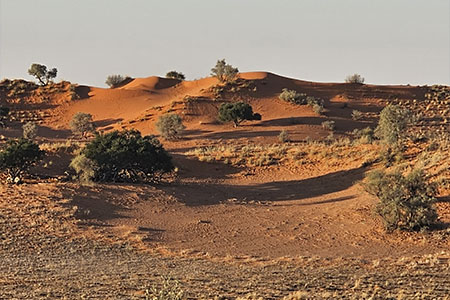
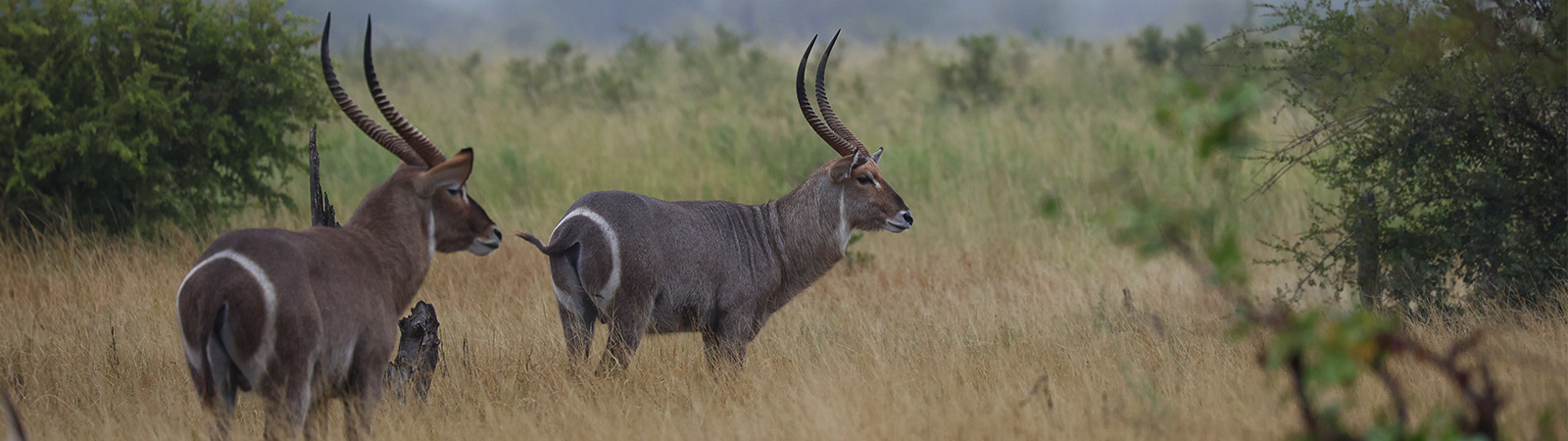
Every hunter’s choice for their favourite game meat begins with the species they hunt. Many hunters prefer the meat of a gemsbuck or springbuck from the red dunes of the Kalahari. Fifteen years ago, my family and I discovered how delicious waterbuck meat is and it has been one of our favourites ever since. Every hunter has their preferences. It is part of the hunting journey to hunt different animals and find your favourite for biltong and droëwors and which is best for table dishes.
Male or female, young or old
Female and younger animals will generally provide better quality meat for family meals, while male and older animals are more suitable for biltong and droëwors. If the landowner allows the hunting of younger and female animals, take advantage of this for the best quality game meat.
Shot placement contributes to the quality of the meat
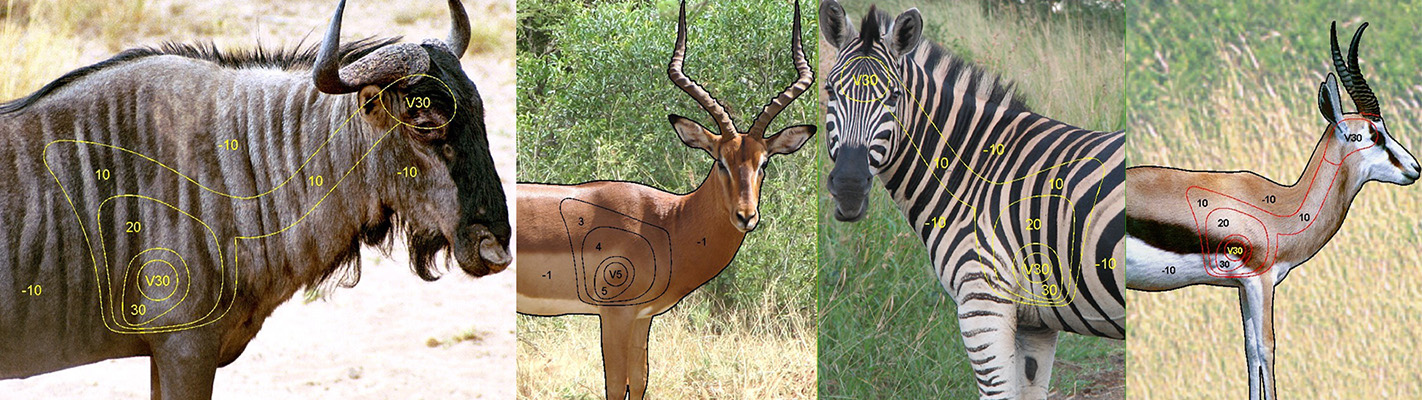
A shot in the gut means it could take a long time to track the animal down (if you find it at all!) which could result in low-grade meat. In the time it takes to track down the animal (a few hours or more), it experiences stress and pain, stimulating the release of adrenaline through its body. Furthermore, the animal’s stomach contents gradually contaminate the abdominal cavity and the rest of the body with bacteria. However, an animal that is killed with a well-placed first shot will provide meat of good quality.
Bleed out the animal
A well-placed heart/lung shot will kill the animal within 10 to 20 seconds. The hunter’s first step is to bleed out the animal. Blood contains bacteria that will spoil the meat if the animal is not bled out immediately. The hunter or his guide should bleed the animal out in the veld as soon as possible while the carcass is still warm and the blood flows easily. The general method is a deep cut across the throat just behind the jawbone, where you can cut through both arteries, the oesophagus, and the windpipe down to the vertebrae. A second method is to make a short cut under the ears on both sides into the main arteries. A third method is to insert a knife with a relatively long, thin blade into the hollow just above the breastbone and cut all the major arteries above the heart. The latter two methods are advisable if the hunter wants to use the head and skin for a trophy mount. All three of these methods cause the animal to bleed out quickly. If the chest and throat of the animal are held at a lower position than the rest of the body, the blood also drains faster.
The hunter must ensure that the animal does not suffer unnecessarily. Sometimes a second shot is needed. Make sure the animal is dead before cutting the throat or inserting the knife into the neck or chest because the animal could jerk its head and cause serious injuries with its horns. Do not underestimate smaller antelope species such as steenbok, duiker, and springbuck. Their short, sharp horns can cause a lot of damage. Also, stay out of the way of the animal’s sharp hooves, which can cause serious injury. The tusks of warthogs and bush pigs are just as dangerous. Always make sure the animal is dead before touching or getting too close to it.
Remove the internal organs
The digested and partially digested plant material (dung) in the stomach and intestines, and the digestion process generate a lot of heat. One can feel the heat when inserting your hands in the abdominal cavity to remove the stomach and intestines of an animal that has just died. It is important to lower the temperature of the carcass to ensure good quality meat. Removing the stomach and intestines as soon as possible is the first important step to reduce the animal’s body temperature.
Secondly, the buildup of gases in the stomach and intestines causes rapid swelling, especially on a warm day.
Thirdly, after death, the bacteria in the stomach and intestine seep through the stomach and intestinal walls and contaminate the rest of the carcass. Therefore, it is essential that an experienced person removes the stomach and intestines in the veld as soon as possible.
The first step is to cut open the abdominal cavity (through the skin and the abdominal membrane) from the breastbone to the pelvis, between the buttocks, without cutting the stomach and intestinal walls. The stomach and intestines are removed from the abdominal cavity without damaging or tearing the stomach and intestinal walls. With smaller animals like springbuck or impala, this is relatively easy. With larger animals such as kudu, blue wildebeest, and waterbuck, the contents of the abdominal cavity are a large, heavy mass that is relatively difficult to remove. With eland, it is an even bigger challenge. I enjoy hunting alone and I learned early in my hunting career how to do this effectively on my own.
Carcass recovery and transport to the slaughter site
Most landowners use a recovery vehicle to transport the animal to the slaughter site where the internal organs (stomach and intestines) are removed, and the carcass is hung up, which makes the process much faster, cleaner, and more efficient. The problem arises when the carcass does not reach the slaughter site within 20 to 30 minutes to remove the internal organs. Consider the following example: on the way to the slaughter site with the carcass, another one or two animals are shot. By the time it takes to track the animal(s) and load them onto the recovery vehicle, the vehicle only arrives at the slaughter site an hour or two after the first animal was shot. Thus, it takes too long for the first carcass to reach the slaughter site. This can be especially problematic on a warm day.
At the slaughter site
At the slaughter site, the carcass must be cleaned without delay and quickly placed in a cool room to lower the carcass temperature to preserve the meat. Hunters can do this themselves or supervise if the staff takes care of the process. This involves, for example, sawing open the chest cavity to remove the clean/red internal organs (heart, lungs, gullet, etc.), as well as removing the anus, colon, liver, and kidneys, cutting off the head and legs, and finally skinning the animal. Good hygiene at the slaughter site, where hands and knives are washed regularly, prevents the carcass from being contaminated.
There is a saying: “The master’s eye makes the horse fat!”
If the hunter is present at the slaughter site or does some of the work themselves, he can check the condition of the carcass. Inspect the clean carcass on the hook after it has been skinned. If obvious abscesses or swollen glands inside and outside the animal, as well as any other injuries, are visible, a decision can be made whether the carcass is suitable for human consumption.
Dr Tertius Bergh, a leader in this field, offers game meat safety courses in collaboration with SA Hunters. This includes a full course on how to inspect game meat for the trade and a separate module aimed at hunters for personal use. The latter group does not write exams or do the six-month practical training, but the hunter learns to assess whether the meat is safe for human consumption. For more information go to Game Meat Safety Course
The carcass in the cold room
As soon as the animal is shot and skinned, the carcass must be stored in a cold room where the temperature varies between 1 and 4 degrees Celsius. Special care must be taken with large animals such as eland, giraffe, and buffalo, which under normal circumstances do not cool down quickly enough in a cold room due to the large mass of meat around the bones. If the bone and bone marrow deep within the meat takes too long to cool down, it could go off with bacteria spreading rapidly to the meat around the bone. This can happen overnight. For large animals, the hindquarters, loin fillets, shoulders, neck, etc., should be cut into smaller pieces and/or cut open down to the bone to allow faster cooling to the bone marrow.
Transporting the meat
During the transportation of the carcass to the butchery or your own home, it is important to keep the carcass temperature as close as possible to the cold room temperature. This is not an easy task because most hunters do not use a refrigerated truck or trailer for this purpose. If the carcass is transported on the back of a bakkie or in a regular trailer, it is advisable to travel during the night and/or colder parts of the day. I enjoy hunting in the Northern Cape, and the long drive back to Gauteng takes at least 9 to 10 hours before the carcasses can be hung in a cold room. I usually drive back at night, and because the hunting takes place in the winter months (May to August), it is very cold at night, which is ideal for transporting the meat.
Processing the Meat After the Hunt
Processing the carcass can be done partially or fully at a butcher that specialises in it. Choose a butcher with a proven reputation and who complies with the regulations for processing game meat. If the butcher does not process your meat professionally, all your efforts to ensure good-quality game meat will be wasted. My wife and I prefer to do most of the work ourselves. We divide the carcass down into hindquarters, shoulders, ribs, loins, etc. Then we cut it further into cuts and make our own biltong.
The rest of the meat we cut into cubes that we take to a butcher to process it further for mince and wors. During this process, we only use the best meat. The bones are also cut up for soup bones and stews or we boiled the meat off the bones to make pies. It’s a lot of work, but my wife and I take satisfaction in ensuring the quality of our game meat, from field to fork. Two well-known retailers with stores nationwide are the Freddy Hirsch Group (Pty) Ltd and Crown National that sell a variety of spices and blends to flavour wors and biltong.
Tradition
Traditionally, South African hunters share their game meat with non-hunters.. Over the years, my wife and I have introduced many friends and family to game meat – first at our home with game meat dishes, and later by sharing a fillet, wors and mince for them to enjoy.
Enjoy the hunting season and your game meat!
About the author
André van der Merwe is a dedicated consumptive hunter who has nurtured his passion for hunting over the past 60 years. During the last three decades, he competed regularly in hunting rifle and field shooting competitions. In 2006, he joined SA Hunters as the Manager, Branch and Shooting Affairs, to support the association’s 83 branch committees. As secretary of the shooting committee, he coordinates shooting activities at branch, regional, and national levels, and promotes and stimulates sport shooting. His commitment to mentoring the next generation of firearm owners, shottists, hunters, and custodians of our natural and cultural heritage is at the heart of his legacy. Read André’s biography here.