
By André van der Merwe (Manager: Branch and Shooting Affairs)
Table of Contents
The build-up to the hunting season
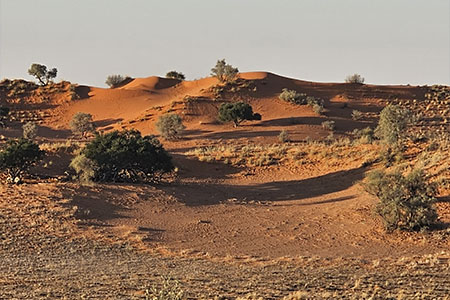
Preparing for the hunting season is always an exciting time. I grew up in the northern bushveld of South West Africa (now Namibia). I have wonderful childhood memories of my Dad, younger brother and I, and later on, my brother-in-law packing our camping and hunting gear into the short wheelbase four-cylinder Landrover, the trip to the hunting farm (usually very early on a freezing winter morning), arriving, unpacking, and setting up camp. We never slept in tents, but under the stars, on the sandy riverbed of the Ugab River underneath enormous Ana trees towering up to 30 m high, to be woken up by the noisy call of francolins at dawn. The day’s first task was for my brother and I to decide which one of us would leave the warm bed and brave the cold to get the fire and coffee kettle going. I remember Dad having fun at our expense and even some comments during this process.
My younger brother, eight years old at the time, stayed behind in camp during the day, hunting with his air rifle along the dry riverbed near the camp. For kilometres in both directions from the camp, the riverine bush on both sides offered an abundance of birdlife that kept the young hunter busy for days on end. He was an independent young boy who could look after himself during the day and prepare his meals. He sometimes even watched over our next meal slowly cooking to perfection in the “swartpotjie” that stood over the hot ash of the fire of the previous evening.
Foster responsible behaviour at a young age
By the time I was 14, I had my own .303 British P14 Enfield hunting rifle and was allowed to hunt on my own in a 1000-ha camp. This privilege came with associated responsibilities such as firearm safety and the constant reminder that you will have to account for every shot that you fired. Ammunition for the centrefire hunting rifle was expensive, but Dad ensured we had ample .22 LR cartridges and an unlimited supply of .177 calibre air rifle pellets for practice. That was how we honed our basic shooting skills.
Looking back on those days, I realise that Dad gave us the freedom to explore, an approach that many people will frown upon today or regard as irresponsible. But Dad applied quite simple principles. Firstly, to expose us to firearms, hunting and related experiences at an early age. I was three years old when I accompanied him on a hunt for the first time. At the age of five, he gave me my first air rifle. He taught us to shoot, instilled firearm safety and ensured that we knew exactly what to do and what not to do. Breaking the rules of basic firearm safety was not allowed. Punishment would surely follow!
Secondly, you were granted the freedom to explore without supervision if you proved you could be trusted. It meant roaming freely or hunting with your centrefire hunting rifle. Dad followed this approach with everything he taught us, and we soon learnt the benefits of earning his trust.
Cherish the precious bond between parent/grandparent and child
In my day-to-day contact with SAHGCA members countrywide, I observe the close bond between parents and children where families spend time together camping, shooting, hunting, or during other outdoor activities. Based on my childhood experiences, I can appreciate the benefits of this bond between a parent and a child. Unfortunately, many youngsters do not have access to such activities for various reasons, such as single-parent families and extramural activities at school. I encourage parents who have not yet done so, to expose their children to nature and the wonder and privilege to hunt. Try it! The return on that investment is priceless.
Was it your father, grandfather or perhaps an uncle who took the time to accompany a bright-eyed youngster on his/her first camping or hunting trip? It creates fond memories for both individuals that will linger with most of us for the rest of our lives. Those experiences with my Dad built my character and helped me develop into the independent person, conservationist, and hunter I am today. It also contributed to the values that have guided me ever since.
Now it is time to teach the grandchildren
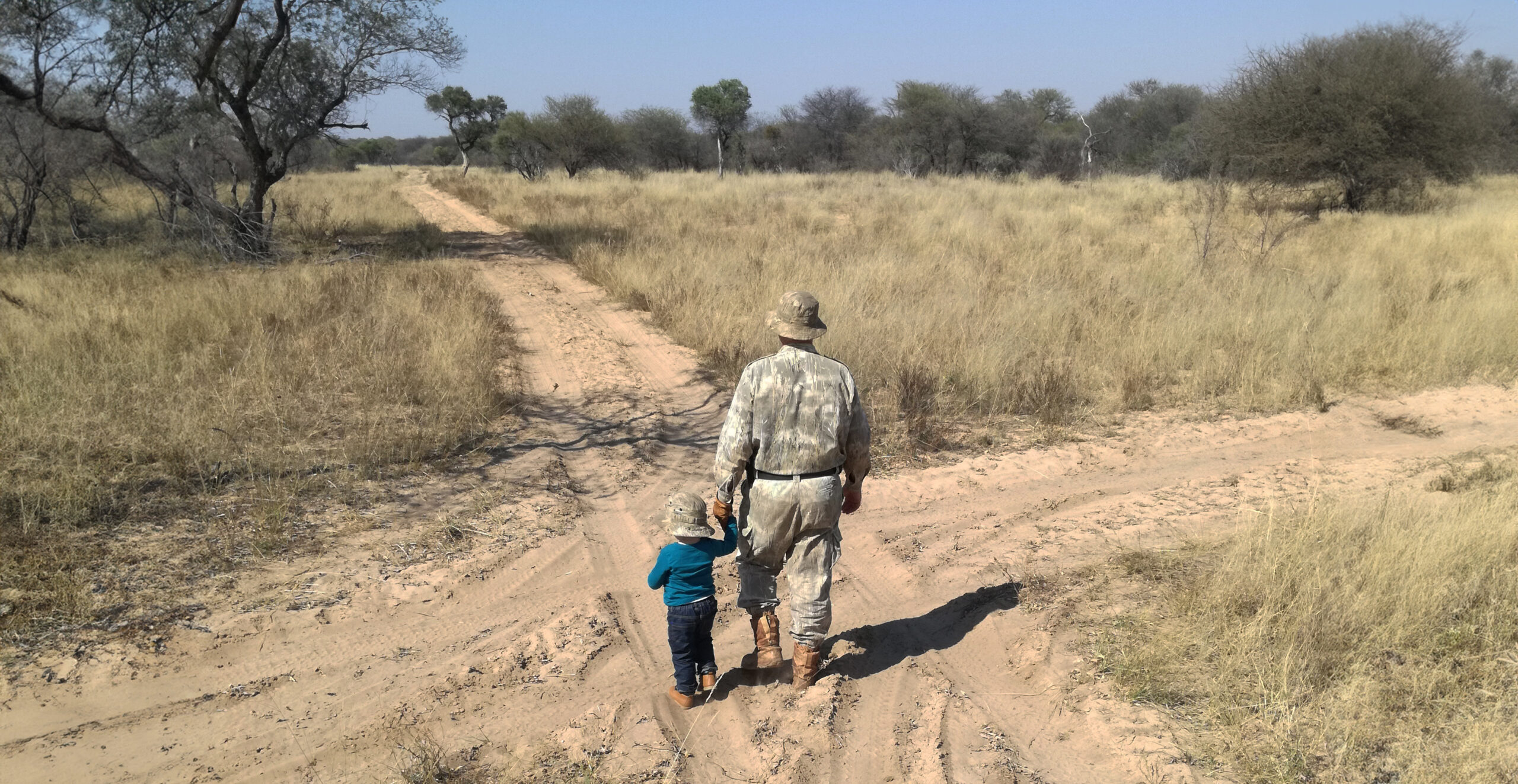
Hunters go through various stages in their lives. I am now at the stage where I enjoy sharing my interests/passions with my children and grandchildren. Since 2008, our extended family has been following the tradition of an annual family hunt when I have had the privilege to introduce both my sons-in-law to hunting. Later, each of the three grandchildren (two girls and a boy) experienced their first family hunt. We do not yet allow our grandchildren to witness the actual killing of an animal. That will only happen once they are emotionally ready for such an experience. However, they are exposed to all the other activities related to the hunt such as the retrieval of the carcass, slaughtering, and processing of the meat. While the hunters are in the veld, the children enjoy the farm and camp life together with the whole family – experiences they would not have had otherwise, growing up in a city. As soon as they showed an interest in shooting, we taught them to shoot with the air rifle and allowed them to progress at their own pace.
During the 2019 family hunting trip, I gave my grandson, Janko, his first air rifle on his fifth birthday. His interest in shooting developed quickly during the 2020 family hunt which was postponed to September due to COVID-19 restrictions. During a visit to our home, we built an air rifle shooting range in the garage. In the hour or two we spent there his shooting skills improved remarkably. Afterwards my wife commented that Janko was fortunate to learn shooting from his grandpa. My response was that I was the lucky one to be his mentor.
In 2022, when Janko was 8 years old, he asked if he could shoot his first partridge or guineafowl with the .22 LR rifle. He did so successfully, proving his emotional maturity for this step. He and his mother cleaned the partridge together, cooked it, and everyone shared the meal. The next day, he mentioned to his grandmother that he would also like to shoot a guineafowl but was reluctant to kill another bird. The lessons about the important responsibility of taking an animal’s life had sunk in.
Invest in the youth to secure their future
Consider sharing your passion for hunting and nature with youngsters in your community or family circle so they can also benefit from these enriching experiences. The memories created in the mentor/pupil relationship become valuable trophies. Our youth is the future. Nurture them. Soon, they will take over from us in more ways than one. Whether they will be equipped to do so, will depend on us, the current generation of hunters.
“In the end we will conserve only what we love;
we will love only what we understand;
and we will understand only what we have been taught.”
Baba Dioum, Africa
SA Hunters a culture of mentorship
- Mentorship is the guidance offered by one experienced person to another
- A mentor shares knowledge, assists, and advises less experienced and often younger persons
- Mentors have experience and knowledge that others can learn from
- SA Hunters: a culture of mentorship – e.g., from parents to children to grandchildren
About the author
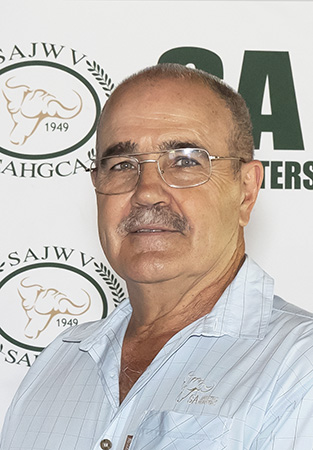
André van der Merwe is a dedicated consumptive hunter who has nurtured his passion for hunting over the past 60 years. During the last three decades, he competed regularly in hunting rifle and field shooting competitions. In 2006, he joined SA Hunters as the Manager, Branch and Shooting Affairs, to support the association’s 83 branch committees. As secretary of the shooting committee, he coordinates shooting activities at branch, regional, and national levels, and promotes and stimulates sport shooting. His commitment to mentoring the next generation of firearm owners, shottists, hunters, and custodians of our natural and cultural heritage is at the heart of his legacy. Read André’s biography here.