

By: André van der Merwe (Manager: Branch and Shooting Affairs)
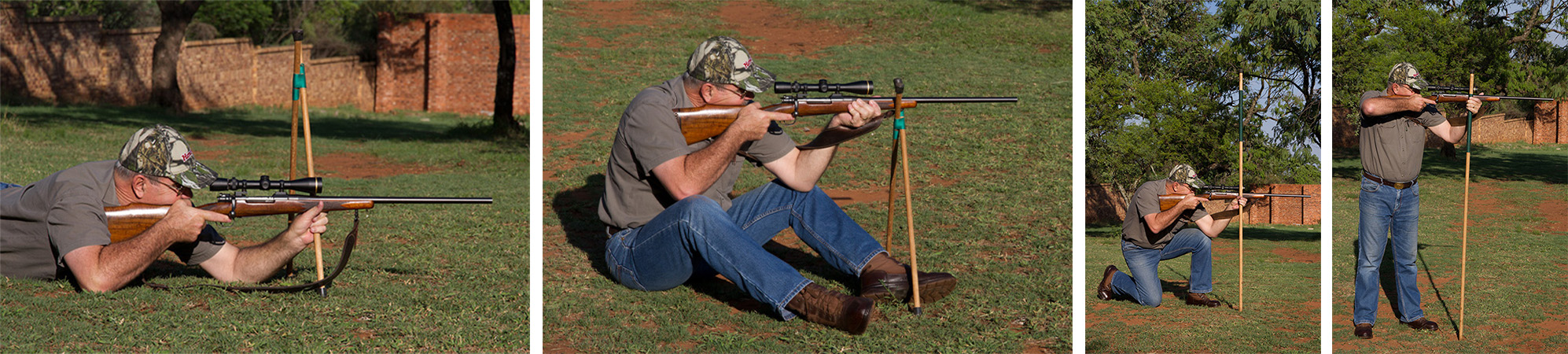
The SA Hunters shooting competitions and exercises deliberately focus on a variety of shooting positions to familiarise shottists with their application and versatility.
Table of Contents
Basic shooting techniques
Basic shooting techniques consist inter alia of a stable and comfortable shooting position, use of the dominant eye, natural (automatic) direction, proper grip and hold of the rifle, the correct sight picture, breathing, trigger control, and follow-through of the shot. Each of these techniques is a building block in achieving a successful shot. If one or more of these techniques are absent or performed incorrectly, the shot will not hit the intended aiming point.
An experienced and successful shottist who maintains a balanced and stable shooting position shot after shot demonstrates skill and proficiency. Those who struggle to place their shots accurately will often identify poor shooting position as the issue.
The basis of shooting skills
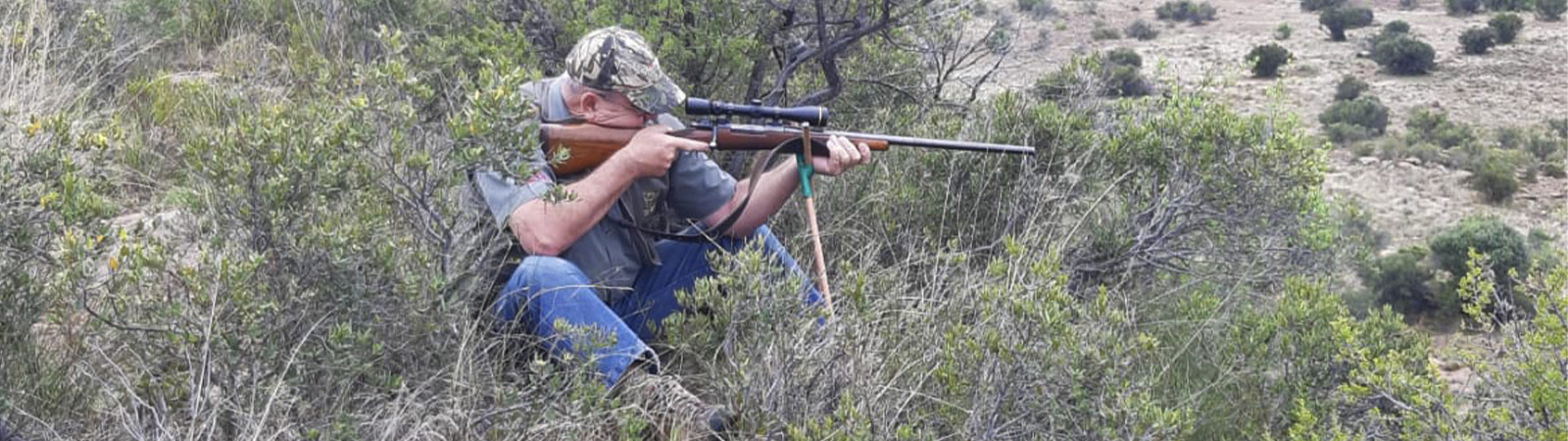
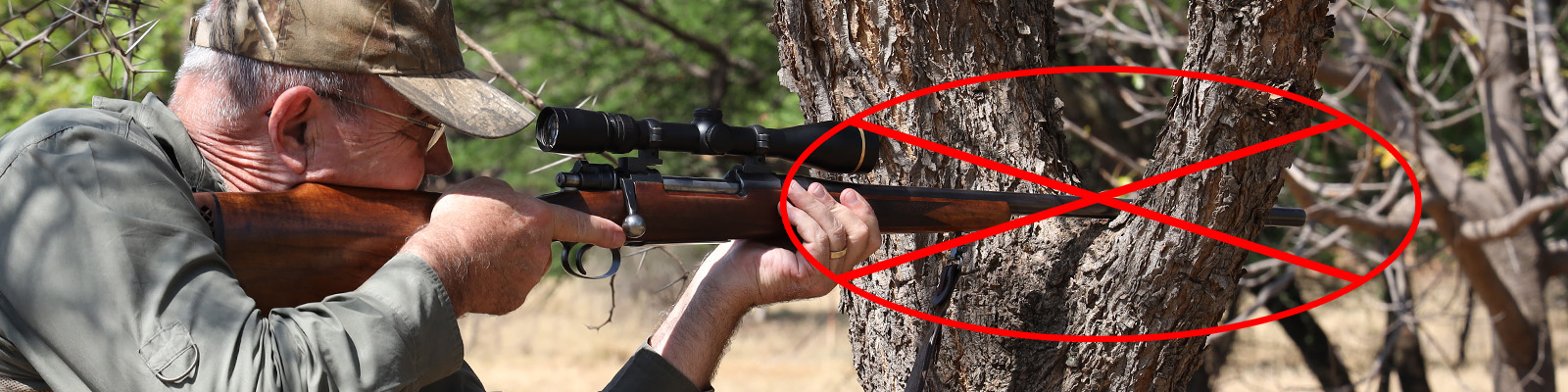
During SA Hunters’ regional shooting competitions in 2015 and 2016, some shooters were dissatisfied with the addition of three shots from the offhand sitting position for the plains shooting exercise and the three snapshots from the offhand standing position for the bushveld shooting exercise. The shottists felt that these offhand shots had no practical application for hunting due to the risk of taking a bad shot at an animal and that they should not be replicated on the shooting range in competitions. These concerns are valid regarding a hunter’s responsibility to ensure a one-shot kill. The shottist must assume the best possible shooting position, preferably using a rest (e.g., a shooting stick), to achieve a successful first shot on the animal.
It is important to note the following:
Firstly, the offhand shooting positions (prone, sitting, kneeling, and standing without any artificial support, e.g., a shooting stick) form the foundation of shooting skills. The shooting range is the place to practice and perfect these positions. If these offhand shooting positions are never practised, there is a critical deficiency in the shooting skills of the shottist that he/she may never know about and that will limit his potential as a marksman.
Secondly, the value of the offhand shooting position in learning the correct shooting techniques lies in their inherent instability. This may seem like a contradiction but think about it carefully! The instability of offhand shooting positions teaches and compels the shottist to focus and concentrate on every shot, ensuring the correct use of a stable and comfortable shooting position, the dominant eye, natural (automatic) direction with the target, proper rifle hold and grip, correct sight picture, breathing, trigger control, and follow-through—all essential for a successful shot.
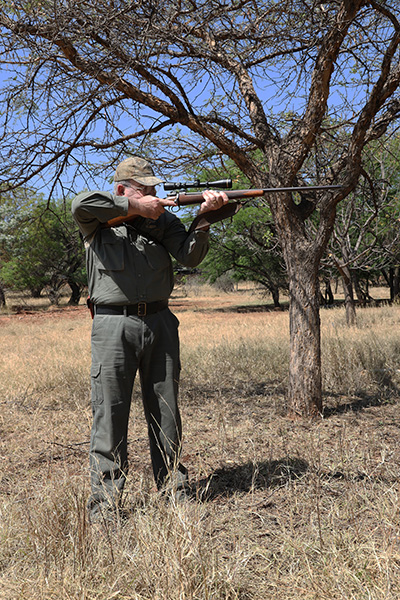
Natural (automatic) direction
What is natural direction and how does the shottist determine it? When a shottist assumes his shooting position, the direction of the rifle with the target is confirmed using the scope or sights. The shottist closes his eyes and relax. Upon reopening his eyes and looking through the scope or sights, the natural (automatic) direction will present itself. If the automatic direction is not at the aiming point, the shottist should move his feet or body until the rifle points at the aiming point on the target. This process is repeated until the natural direction is correct. Always keep in mind that the rifle is an extension of the body and that the body should align the rifle with the target instinctively. This is correct natural direction, which is why it is also referred to as automatic alignment. With practice, the shooter will eventually adopt the correct direction automatically.
If the shottist’s natural direction is incorrect and a shot is fired, the following will happen: If the shooter’s automatic alignment for example places the rifle’s sightline to the left of the target and he forces the rifle to the right without adjusting his feet or body, a natural alignment cannot be achieved. This creates unnatural muscle tension. When the shot is fired, the shooter’s muscles will relax back to their original position, causing the shot to land to the left of the aiming point on the target.
From offhand shooting positions, poor automatic alignment is likely to result in missing the aiming point on the target. In the offhand sitting position, such as in the 100-metre plains shooting exercise, an error in automatic alignment will result in a poorly placed shot. However, if the same shot is taken with the support of a shooting stick, the same mistake may not be as noticeable. The shot may still be well-placed due to the stability provided by the shooting stick.
Trigger control
The same applies to trigger control and follow-through when shooting from an offhand position. A shot fired from an offhand position using an incorrect technique, such as pressing the trigger the moment the sights align with the target, often causes unwanted movement in the trigger finger, hand, or wrist. This movement affects the rifle’s stability, resulting in the bullet missing the intended point of aim. Shottists often describe this as a shot being “pulled” or “jerked.” The correct technique is to align the target through the scope or sights and apply gradual, smooth trigger pressure. (The impact of poor trigger control is far more noticeable in an offhand position than in a position with good support, such as a benchrest position.
Identifying basic issues with shooting techniques
Offhand shooting positions reveal any issues with basic shooting techniques. Shottists who rely exclusively on supported shooting positions often develop errors in fundamental techniques, leading to bad habits that negatively impact shooting proficiency. Therefore, offhand shooting positions are a crucial component of shooting skills, ensuring that the shooter maintains a continuous focus on proper shooting techniques.
SA Hunters offers a variety of official hunting and sport shooting exercises at branch, regional and national levels where shottists can practise from offhand shooting positions to improve skills and accuracy. Examples of these shooting exercises are the President and Interbranch Team shooting, 25m and 50m Precision, Junior Shooting, Limited Bolt Action and various handgun shooting exercises.
Instinctive ability for an accurate shot
In hunting situations, there is usually no time to consciously think about basic shooting techniques and positions because hunters instinctively take their shots. The moment a hunter aims at an animal, he must pay attention to the following factors:
- from which position are you taking the shot?
- If there is more than one animal, which one will you shoot?
- shot placement for a clean kill;
- ensure that there is no other animal behind the one you are aiming at;
- the distance to the target or wind that may influence the bullet trajectory.
The hunter must assess the conditions, process the information, and decide on the best shooting techniques and positions for a successful shot within seconds. It is in these situations that the experienced shottist and hunter distinguish themselves through the instinctive ability to determine whether a shot is possible and, if so, to execute it successfully.
Conclusion
A shottist who regularly practices offhand shooting positions at the range continuously improves their instinctive shooting skills. It is similar to driving a car. An experienced driver does not have to think about the steps involved in driving. Shifting gears and checking the rearview mirror become second nature, meaning they are done instinctively. In the same way, the instinctive and correct application of all basic shooting techniques determines your ability as a shottist.
Development of Shooting Skills for Hunters
The Manual for the Development of Shooting Skills for Hunters, is abundantly illustrated with colour photos, a total content of 58 pages and available in CD format.
Available at SA Hunters Shop for R100, send an email to shop@sahunt.co.za
About the author
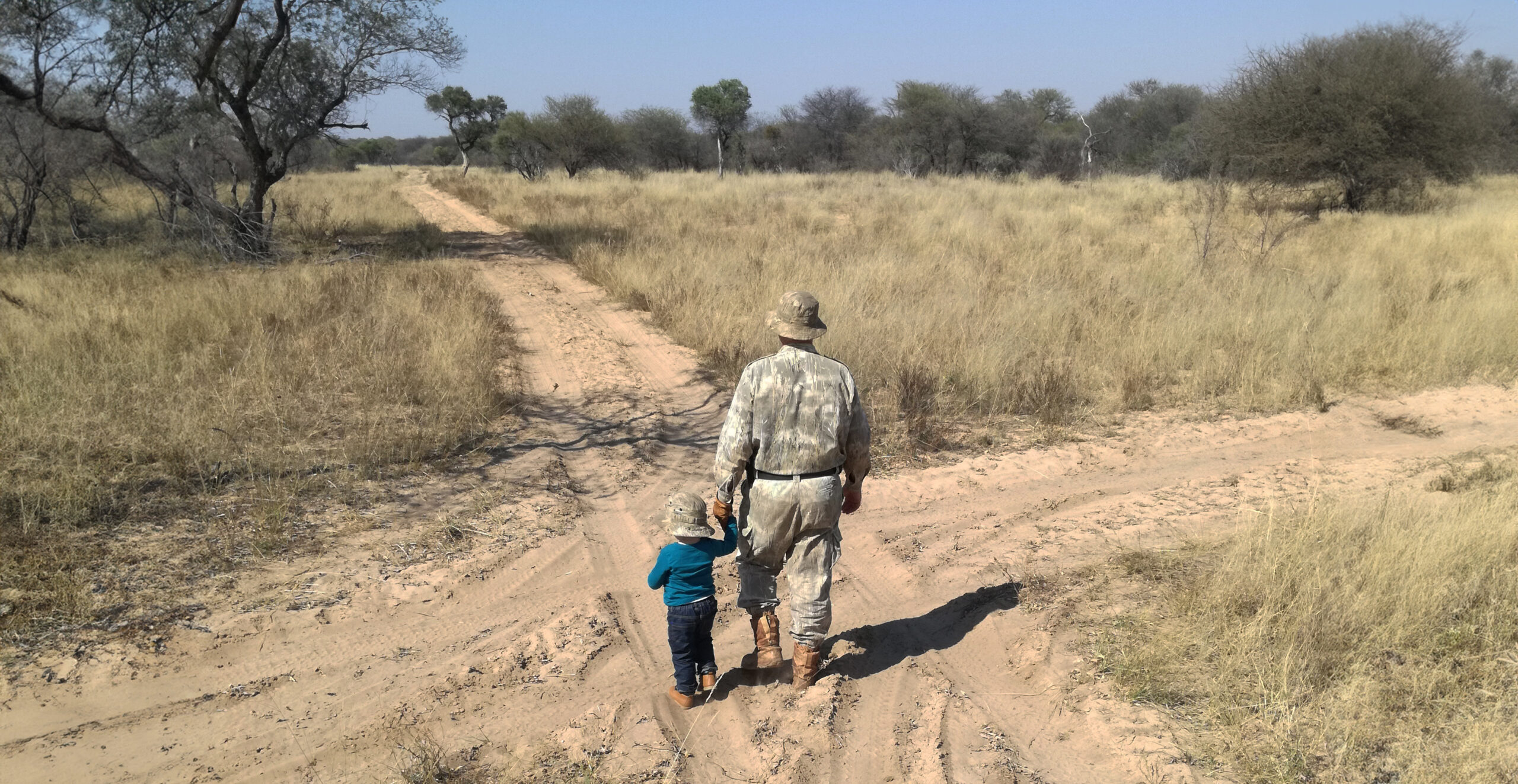
André van der Merwe is a dedicated consumptive hunter who has nurtured his passion for hunting over the past 60 years. During the last three decades, he competed regularly in hunting rifle and field shooting competitions. In 2006, he joined SA Hunters as the Manager, Branch and Shooting Affairs, to support the association’s 83 branch committees. As secretary of the shooting committee, he coordinates shooting activities at branch, regional, and national levels, and promotes and stimulates sport shooting. His commitment to mentoring the next generation of firearm owners, shottists, hunters, and custodians of our natural and cultural heritage is at the heart of his legacy. Read André’s biography here.