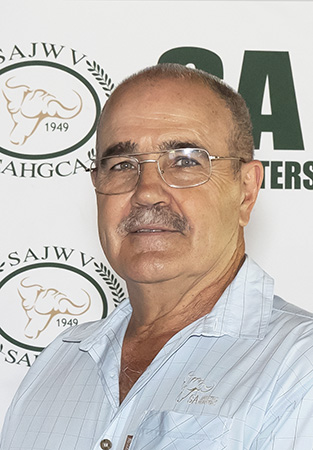


By: André van der Merwe (SA Hunters Manager Branch and Shooting Matters)
Table of contents
One rotten apple spoils the barrel
A healthy relationship and partnership between hunters and game farm owners can go a long way to ensure the future of hunting in South Africa. When both the hunter and the game farm owner are satisfied that they received value for money, it is a successful transaction and possibly the beginning of a life-long friendship.
The above should be fairly self-evident – but this is not the case! We often hear of incidents on game farms that damage the relationship between hunters and game farm owners. Many game farmers experience disastrous incidents with hunters and are unhappy with the behaviour of South African hunters. It is difficult to determine how many misbehaving hunters are around, but one rotten apple spoils the barrel.
If you are a responsible hunter, read further to understand what is happening and how the misconduct of problem hunters (even if they are a relatively small group) undermines the future of hunting for you and your children.
Misconduct
The universal principle is that hunters are guests on the game farm who should conduct themselves accordingly. The fact that you are a paying guest should not make any difference to your behaviour. Unfortunately, we live in an era where bad manners combined with an attitude of entitlement have become a norm in our society.
The nature of the offenses indeed questions the mentality of these hunters. Would they also act this way in their daily conduct? The universal complaint is alcohol abuse, which leads to irresponsible, rude, and arrogant behaviour. There are examples of hunters who, under the influence of alcohol, damage property, consume alcohol on hunting vehicles, and even when handling firearms, as well as unsafe firearm handling in general.
Some hunters also deny wounding shots and refuse to pay for the game or try to bribe the guide to stay quiet about the wounded game. Then there are hunters who do not want to search for wounded animals and are willing to pay for it but immediately want to try hunting another animal.
Hunters are often unprepared for the hunt because they did not practise at the shooting range beforehand. Sometimes their equipment (rifle/ammunition or scope) is not of acceptable quality, yet they still insist on hunting, often resulting in wounded game.
Hunters also disregard instructions from farmers not to shoot a certain species or gender of a species, e.g. a kudu bull or certain breeding specimens. These hunters often insist on shooting these animals. They think because they can pay, they will get away with it and merely tell the landowner to invoice accordingly.
Another example is a hunter who wanted to shoot a red hartebeest bull but shot a calf instead. The excuse was that the guide did not point out to him that it was not a bull. “Don’t worry” he said, “I will pay the price for a bull”. Such hunters fail to understand that the decision to pull the trigger rests with the hunter and therefore the responsibility for the result, is his as well.
Many hunters do not understand (or they just do not care) that firewood is a precious resource that should be used with consideration of the source. Firewood is a product that can provide a useful income for the game farm owner, yet it is often made available to hunters for free on many farms. Making unnecessarily large fires (where no one can get close to them) that consume heaps of wood is a major concern for many farm owners. Firewood is a privilege that hunters should use judiciously. If you had to buy the same amount of wood, you would probably think twice before making a large fire.
Littering is another problem that game farmers have to deal with. Hunters should only leave their footprints behind, not their rubbish. Treat hunting vehicles at your disposal with respect, keep them tidy and do not abuse it. It is expensive for game farmers to maintain and repair these vehicles.
There are also hunters who insist on paying cash because they do not want to pay VAT. This creates a problem for the farm owner who is a registered VAT vendor. He must charge VAT when he invoices the hunter, or he will be breaking the law and face prosecution. The hunter cannot expect the farmer to act outside the law.
There are many more examples of irresponsible behaviour. It is a pity that a certain group of hunters damage the reputation of other responsible hunters. There are already game farmers in South Africa and Namibia that no longer allow South African hunters on their farms. Once game farms’ quota of trophy animals has been hunted by e.g., foreign hunters, the remaining game is either culled with the help of harvesting teams or captured alive by game capture teams and sold. Other game farm owners have a philosophy of allowing only hunting groups they know or their friends to hunt and do not permit new hunters. This trend holds nothing good for hunters in the long term.
Hunting hooligans
These upsetting examples speak of arrogance, disrespect, irresponsible behaviour, alcohol abuse and a general attitude that money justifies this conduct! The time has come to name and shame these people for their despicable behaviour.
Responsible hunters do not want to be associated with such people. The reality is that their misconduct affects responsible hunters who should expose this behaviour and try and educate them where possible. Responsible hunters should set an example to everyone around us, especially new hunters – whether they are children or adults – to ensure that they become positive ambassadors for hunting!
Game farm owners also have a responsibility not to tolerate misconduct. Unfortunately, farmers allow hunting hooligans to book subsequent hunts despite their bad behaviour. Why? Because of the large income generated by some hunting groups, some game farmers tolerate their misconduct. Game farming is a business that needs to show a profit, and every game farmer decides on the best way to accomplish that. If a game farmer’s philosophy is to make money at all costs he will have to accept that he is complicit in this bad behaviour of hunting hooligans and that he encourages it! The behaviour of these hunting hooligans can only be stopped if game farmers are prepared to take a stand and act against it.
Every hunter who loves our environment and wants to preserve our hunting heritage for their children is advised to read the SA Hunters and Wildlife Conservation Association’s Hunter’s Code again to refresh their memory. It refers, among other things, to the hunter’s respect for life, nature, the law, landowners’ rights, and the hunter’s commitment to firearm safety.
Keeping your house in order
Some game farm owners indeed create problems for hunters, and we should consider these as well. Many problems and misunderstandings between game farm owners and hunters can be avoided if the hunter does his homework properly before booking his hunt. Ask for references from other hunters and talk to them about their experience. It will help the hunter to make an informed decision about a hunting destination. Before booking the hunt, ask the game farmer for a price list, list of huntable game and the applicable hunting rules – in writing. If both hunter and game farmer stick to these rules then there should be no misunderstandings. If the game farmer is not prepared to provide the information you requested, go elsewhere!
Whether it is your first visit to that farm or it is a place that you visit frequently, it is always a pleasant experience to arrive on the farm and enjoy the fresh air and scenery. Reflecting on the highlights of my hunting excursions, I always remember the hospitality and the efforts to make my stay as comfortable and successful as possible.
The best proof that you have made a positive impression on the game farmer is when you are invited back. The greatest compliment any hunter can ever receive is when the farm owner asks you to plan your next visit for when he wants to go on vacation.
In the book, The Old Man and the Boy by Robert Ruark, the grandfather said to his grandson: “I never knew a bad man who was what I’d call a sportsman. I never knew a true sportsman who wasn’t a gentleman. So, if you are a gentleman and a sportsman, you can’t be a bad man. Is that clear?
A hunter who understands and agrees with this view and practices this is on the right path.
About the author
André van der Merwe is a dedicated consumptive hunter who has nurtured his passion for hunting over the past 60 years. During the last three decades, he competed regularly in hunting rifle and field shooting competitions. In 2006, he joined SA Hunters as the Manager, Branch and Shooting Affairs, to support the association’s 83 branch committees. As secretary of the shooting committee, he coordinates shooting activities at branch, regional, and national levels, and promotes and stimulates sport shooting. His commitment to mentoring the next generation of firearm owners, shottists, hunters, and custodians of our natural and cultural heritage is at the heart of his legacy. Read André’s biography here.