


By: André van der Merwe (Manager: Branch and Shooting Affairs)
Table of Contents
Hornady Interlock Bullets
For the past 20 years, I have been satisfied with the results obtained from 180-grain Hornady Interlock Spitzer bullets when hunting with the .30-06 Springfield. These are lead-core bullets with a copper jacket designed to expand upon impact which ensures a large enough wound channel and significant damage to soft tissues such as the heart and lungs. The core (retaining 65% to 75% of its mass) penetrates deeply, ensuring a quick death. Over the past ten years, I have shot approximately 50 animals (blue wildebeest, kudu, and waterbuck) with these bullets at distances ranging from 15 to 300 metres with well-placed shots. I have never needed a second shot.
With such good results over a relatively long period, there was no reason to consider changing bullets. Over the past few years, SA Hunters have increasingly become involved in a study regarding the effectiveness of lead ammunition for hunting purposes and its effect on meat quality. X-rays of carcasses have shown that lead-core/copper-jacketed bullets with a heart/lung shot can leave up to 400 lead particles in the animal, most of which are microscopically small. One wouldn’t know if you ingested any of them with your favourite game meat cut. It was also found that the particles are distributed over a much larger area in the carcass than just the damaged tissue, posing a potential health. In my household, we often eat game meat, therefore the quality is important.
Read the SA Hunters position on lead ammunition for more information on research and choices regarding alternatives for bullets and ammunition.
Titan Bullets
On recommendation from a colleague, I decided to try out the Titan bullets. At the beginning of 2020, I started experimenting with Helber International Trading CC’s (a South African manufacturer) 163-grain copper monolithic Titan bullets in the .30-06 Springfield. I decided on the 163-grain Titan bullet at a velocity of 2740 fps, achieving 50mm three-shot groupings at 200 m.
The Titan is a monolithic copper-alloy bullet with a boat tail and hollow point that opens upon impact with the animal into four identical petals. The theory is that the petals break off after about 50mm penetration, each forming a secondary wound channel. The remaining core of the bullet penetrates further creating a primary wound channel, leaving a blood trail at both the entry and exit wounds. Thus, there are a total of five separate wound channels. Visit www.helber.co.za for more information on Titan bullets.
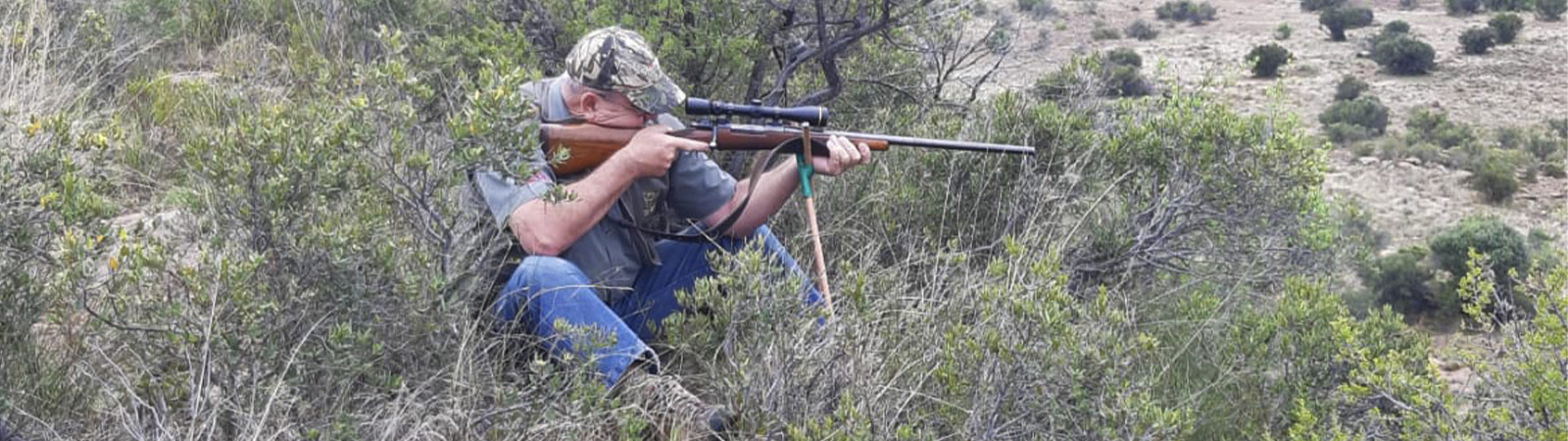
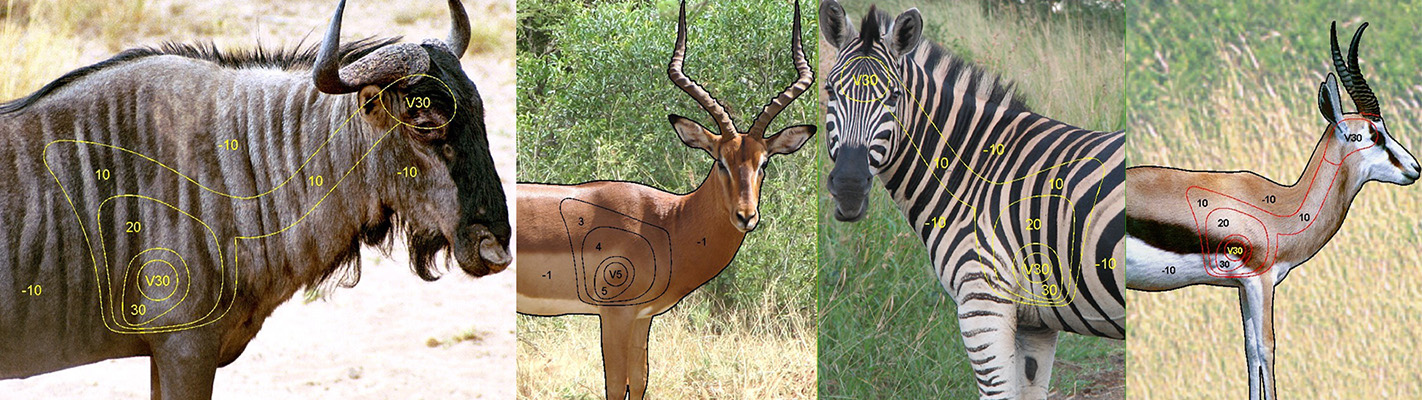
During the COVID-19 lockdowns in 2020, our planned family hunt in the bushveld was postponed from June to September 2020. It was the first time I hunted in the bushveld so late in the year! I hunted an impala, a warthog, and a blue wildebeest with the 163-grain Titan bullets at 2740 fps. The impala and warthog stood broadside at close range (40-50 m), and I was aiming at the heart/lung area. The bullet went through the heart in the warthog and just above the heart of the impala. In both cases, the lungs were shredded (my preference for a quick kill shot), with an exit wound of about 30-40 mm in diameter, leading me to think that the four petals also exited with the bullet’s core. With the blue wildebeest, which stood at an angle at about 120 m, the shot placement was not ideal. It was too low in the chest cavity, just above the brisket, but the entry and exit wounds left a good blood trail, making the follow-up easier. The animal was found dead.

By 2024, after five hunting seasons, I had shot 29 animals (warthog, impala, springbuck, waterbuck, kudu, and blue wildebeest) with the Titan bullets with good results. These bullets are accurate and effective on game with no risk of lead particles contaminating the carcass. They cause less meat damage than the lead-core/copper-jacketed bullets I used previously. Some monolithic bullets require relatively high impact speeds of 2400 fps and more to expand reliably for a proper wound channel. According to the manufacturer, Titan bullets open and the petals break off at impact speeds as low as 1300 fps, making the Titan bullet a very effective monolithic hunting bullet. A hunt or two of larger species such as kudu at 250 or 300 metres will provide the necessary practical experience at longer distances.
Effect of Titan Bullets on Meat Quality
With at most the four petals potentially remaining in the carcass, the chances of contamination of a carcass are much less than with a lead bullet or a copper-jacket/lead-core bullet such as the Hornady Interlock bullet, which leaves hundreds of microscopic to larger lead fragments in the carcass. In my experience the concentrated wound channel of the Titan bullets causes less damage in e.g., a shoulder shot placement for a heart/lung shot than the Hornady Interlock bullets.
With the bullet core passing through the animal, it is important to be aware of other animals in the vicinity to avoid hitting a second animal. This aspect is, of course, always a consideration regardless of the type of bullet you use.
The purpose of this article is to illustrate how I decided on the Titan bullet. There are a variety of local and imported monolithic bullets available in South Africa, experiment until you find the bullet that meet your needs.
Other monolithic bullet
There are numerous other monolithic bullets available, but I have no experience with them. The Titan bullets are working for me and another monolithic bullet may work for you. The purpose of this article is to illustrate my reasons for switching to monolithic bullets specifically for hunting.
About the author
André van der Merwe is a dedicated consumptive hunter who has nurtured his passion for hunting over the past 60 years. During the last three decades, he competed regularly in hunting rifle and field shooting competitions. In 2006, he joined SA Hunters as the Manager, Branch and Shooting Affairs, to support the association’s 83 branch committees. As secretary of the shooting committee, he coordinates shooting activities at branch, regional, and national levels, and promotes and stimulates sport shooting. His commitment to mentoring the next generation of firearm owners, shottists, hunters, and custodians of our natural and cultural heritage is at the heart of his legacy. Read André’s biography here.