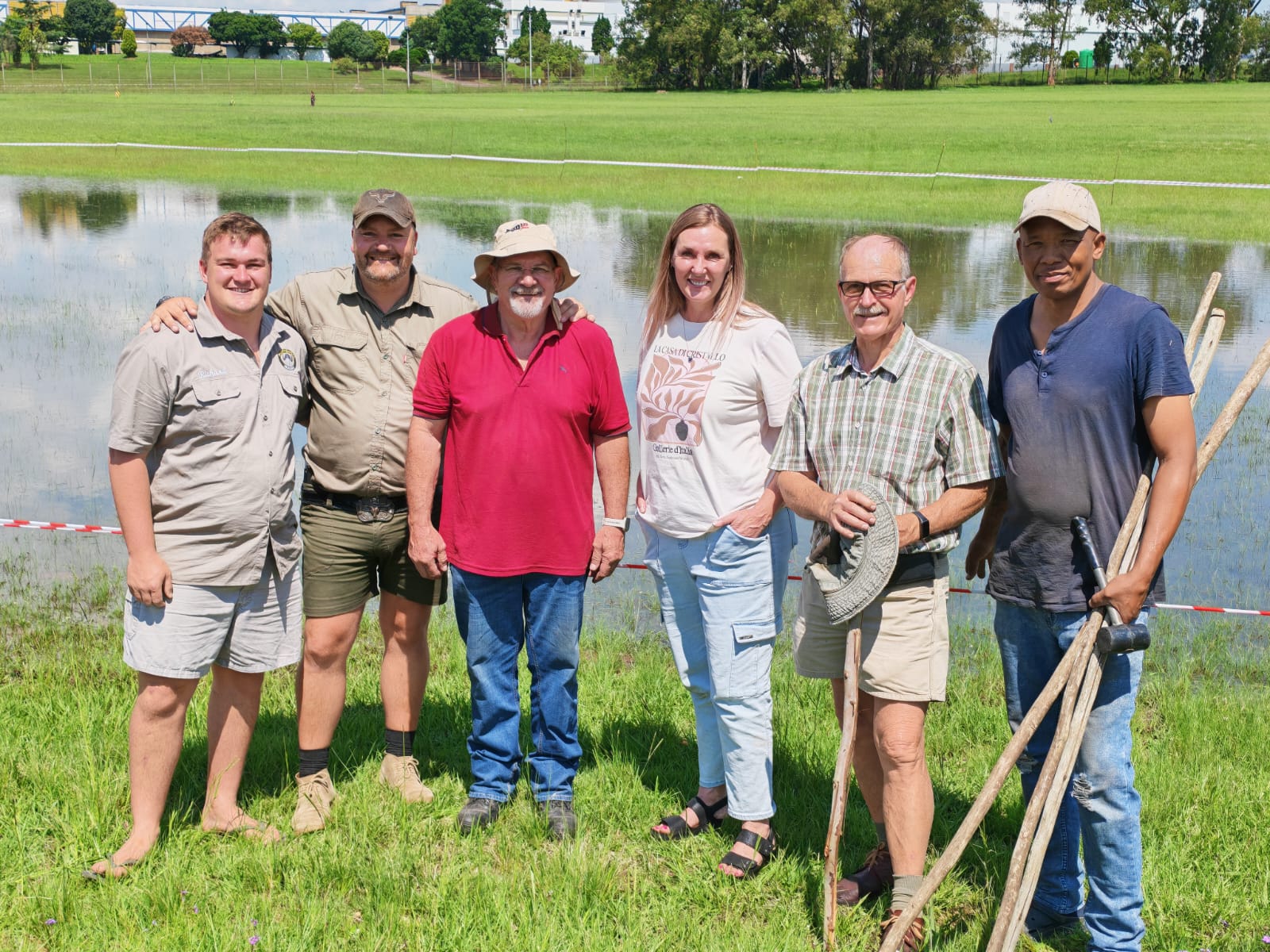
John Power (Conservation Coordinator General De La Rey)
Lizanne Nel (Conservation Manager)
2 February 2024
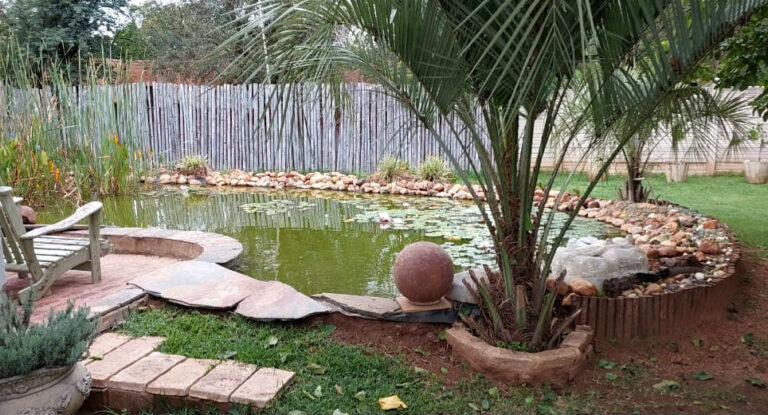
On 31 January 2024, the local General De La Rey branch of SA Hunters assisted with an otter that needed to be rescued after entering a residential property on the outskirts of the North West town of Lichtenburg. Unfortunately for the otter, it was trapped in the yard and had even entered the home, causing havoc. It snapped at the homeowner’s Yorkshire Terrier that was merely defending its turf! A local veterinarian was called in and provincial nature conservation was alerted immediately. The otter was most probably attracted to the brightly coloured fish in the khoi pond which would have been an easy take-away meal.
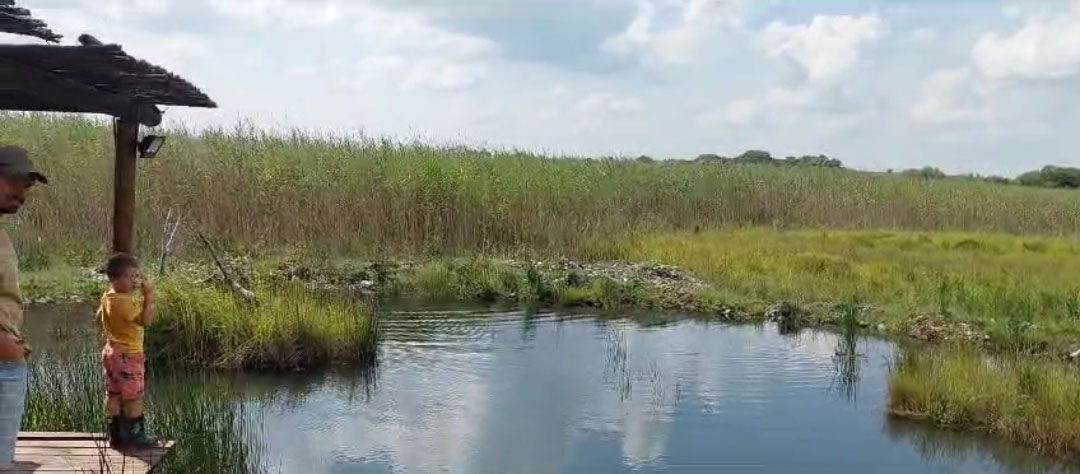
The khoi pond with bright coloured fish that attracted the otter.
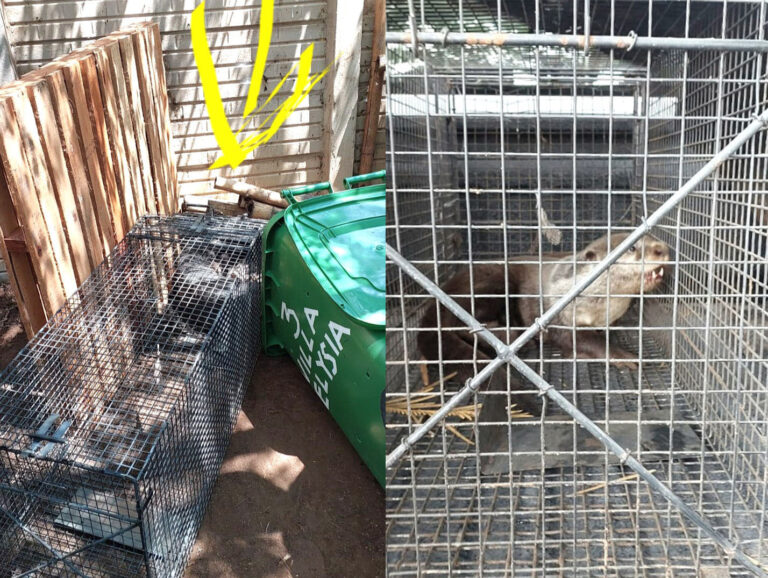
As is customary in the North West province, the provincial conservation assessed the situation and captured and removed the animal from the premises. As a result of the good relationship between the provincial authority and the SA Hunters and Game Conservation Association, the General De La Rey branch came to the rescue and built a crate to transport the otter to a safe location and out of harm’s way.
The otter was captured and relocated.
The otter was identified as a Cape clawless otter that probably came from the Hart River less than half a kilometre away. They are known to show more tendencies to wander from water. This animal was a subadult, that would typically disperse and wander further from their home. Like most carnivores, they are also territorial. Apart from the Cape clawless otter, only one other species occurs naturally in South Africa, namely the Spotted-necked otter.
The relocation of the otter was handled in a manner that would simulate a natural dispersal process. If it were an older adult, it would have been returned to the nearest suitable habitat.
The provincial nature conservation entity had caught another otter in a similar situation but less chaotic circumstances in Klerksdorp a week earlier. In that case, all the fish in the pond were caught. Fortunately for the owner in Lichtenburg, the otter did not succeed in catching any fish.
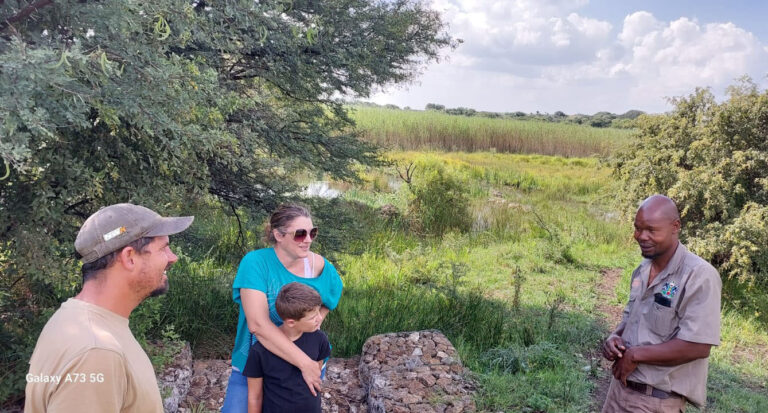
Molemane Eye Nature Reserve where the otter was released.
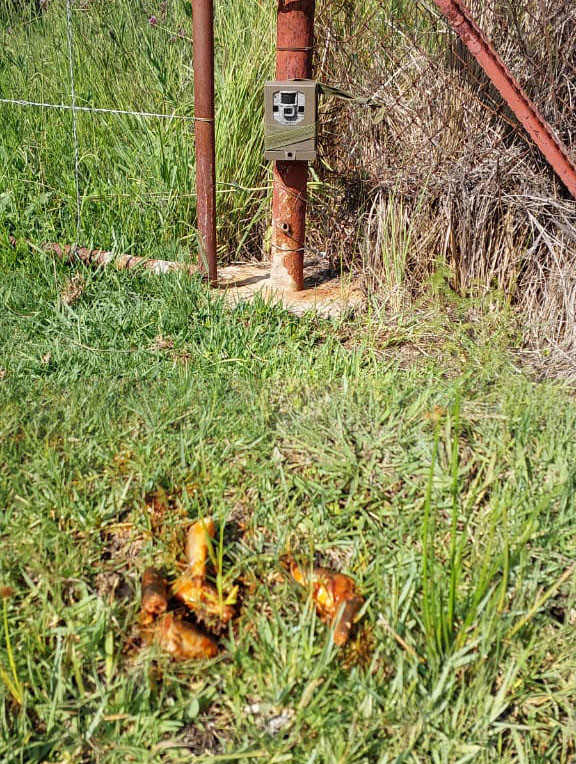
A remote camera was put up with success to capture images of the otter after release.
Otters can be problematic in some instances, and it is usually farmsteads that are vulnerable to predation events, not only of fish but sometimes of poultry too, especially ducks. They rarely enter a suburban environment, but homeowners should be aware of the possibility. If that happens, it is best to alert the relevant authorities or conservation organisations immediately.
Although very rarely seen, please alert us to any sightings that you may have had of these intriguing species that will soon be loaded onto the Sightings App.
Conservation Status
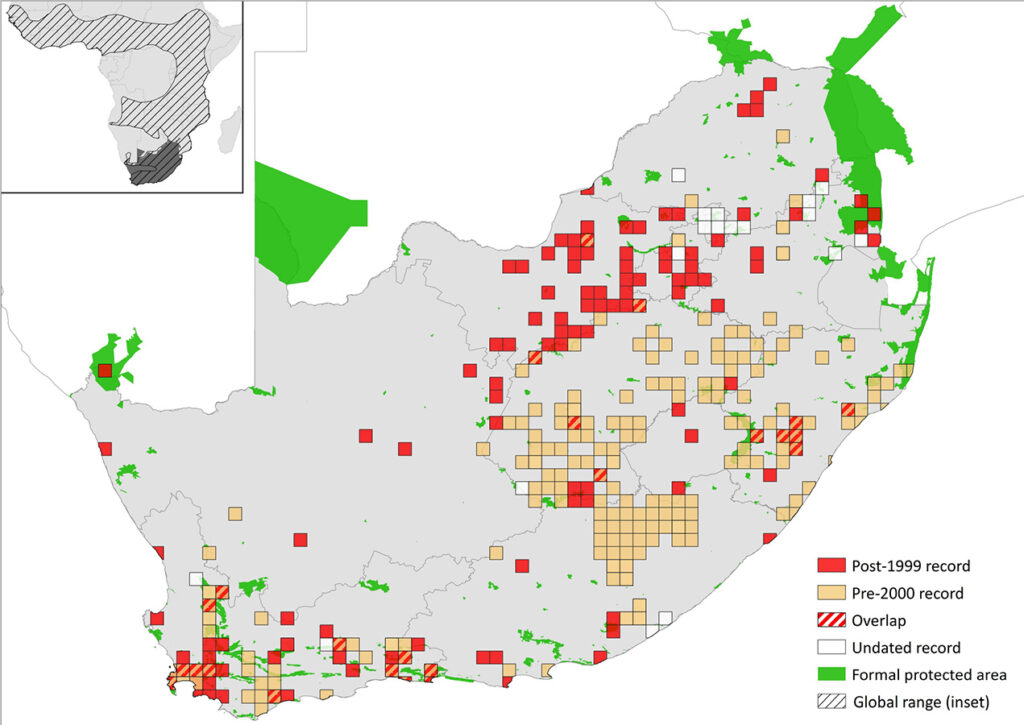
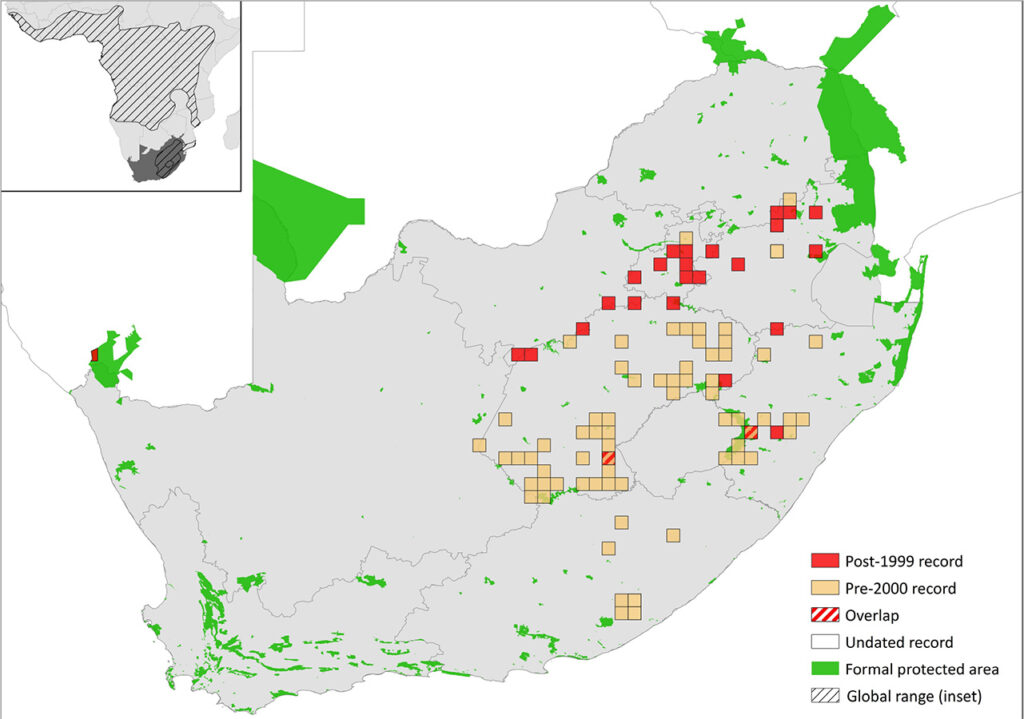
Aonyx capensis - Cape Clawless Otter, Near threatened
The main threat to the Cape Clawless Otter and the Spotted-necked Otter across its range is the deterioration of freshwater ecosystems. In South Africa, 84% of the river ecosystems are threatened, including 54% being Critically Endangered, 18% Endangered, and 12% Vulnerable. This is exacerbated by the loss of habitat as a consequence of increased agricultural activity and increased disturbance to otters resulting from human settlement expansion.