Pangolin conservation is about real actions from people, caring enough about the survival of endangered pangolins to make a commitment, albeit in many different ways. Today, we celebrate Pangolin Guardians in Action, in line with the theme of World Pangolin Day. These guardians are the people who step in when a pangolin’s story could have ended and help turn it into something extraordinary.
This is the story of Paige, a Temminck’s pangolin whose survival is a direct result of dedicated guardians from different organisations working together.
A rescued pangolin
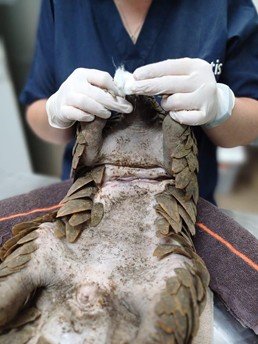
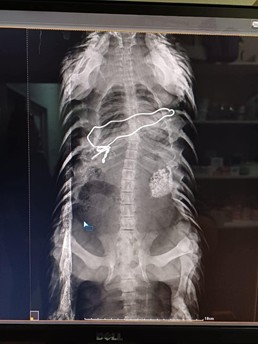
Paige was recovered from poachers on 16 October 2024. She was in critical condition after being held in captivity for several days. She was suffering from severe starvation, and a snare was tightly wrapped around her body, cutting deeply into her flesh. Her injuries were extensive.
Paige when recovered (Photo by Debbie Coetzee)
Paige when recovered (Photo by Debbie Coetzee)
Care and rehabilitation
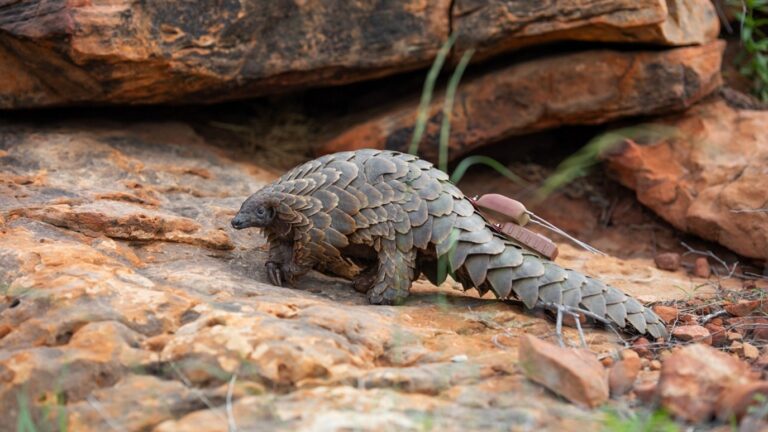
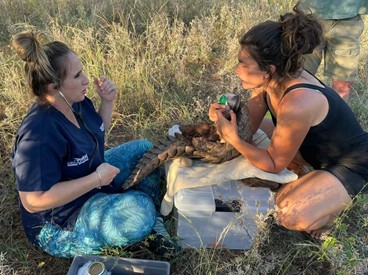
Paige was placed in the care of pangolin specialist Dr Debbie Coetzee, a wildlife veterinarian at Hoedspruit Animal Hospital, who works closely with Emma de Jager, animal rehabilitation and pangolin specialist from the Umoya Khulula Wildlife Centre. Despite her injuries and poor condition, it was clear from the start that Paige was a survivor. Her recovery was slow and uncertain, but she proved to be a true fighter and recovered well enough during her time in care to be released back into the wild on 9 January 2025.
Page released with research tags (Photo by Francois Meyer)
Release back into the wild
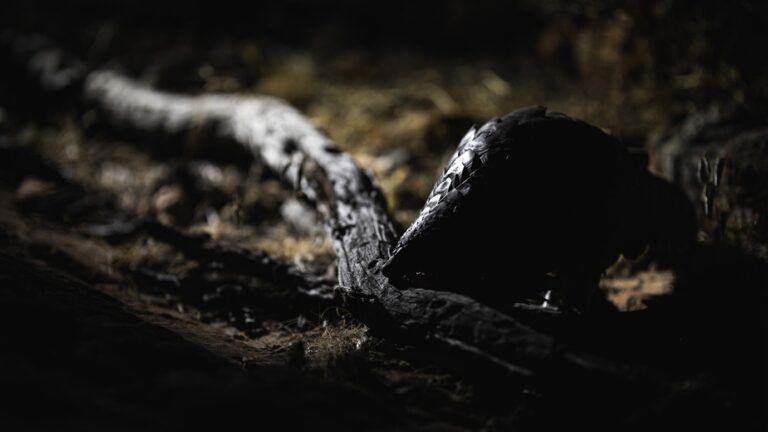
Her release was led by our conservation coordinator, Francois Meyer (conservation ecologist and pangolin specialist), with Níall Beddy assisting in post-release monitoring. Science-based protocols developed by Francois during his Master’s degree guided the reintroduction to nature, an extensive game ranch of Howard Knott, one of our members in Limpopo. True to her resilient nature, Paige quickly proved herself a busy, determined individual, soon finding a safe place to settle.
Night monitoring (Photo by Francois Meyer)
A bright future
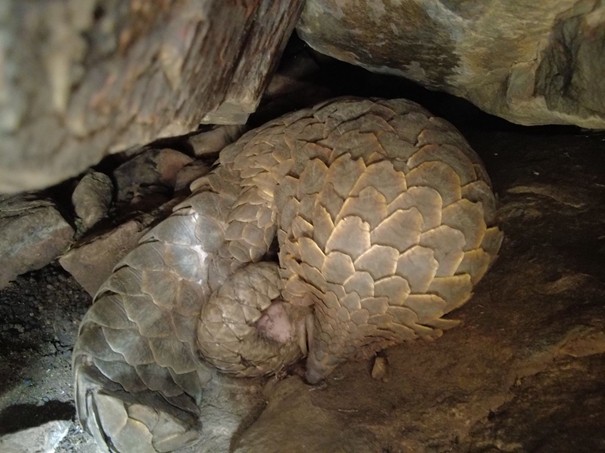
On 24 November 2025, during routine fieldwork, something unexpected was noticed… Paige’s mammary glands were swollen. This raised a quiet but hopeful possibility: she might have had a pup! On 17 December, that hope was confirmed. Níall had a brief opportunity to observe Paige in her shelter and captured a quick photograph. This was the first confirmation that Paige had indeed given birth and that the pup was alive.
Paige and her pup were given maximum space, with minimal disturbance. Even so, Paige made one thing very clear: she is an exceptional mother. She went to great lengths to keep her pup hidden, hiding it in deep shelters and shielding it with her body while resting. This is remarkable behaviour to witness and a good sign of her rewilding.
The next confirmation of the pup’s survival came from a strategically placed trail camera, which provided reassurance that the pup was growing stronger. With this evidence, the monitoring team could finally relax, knowing that both mother and pup were thriving.
Paige and her pup! (Photo by Níall Beddy)
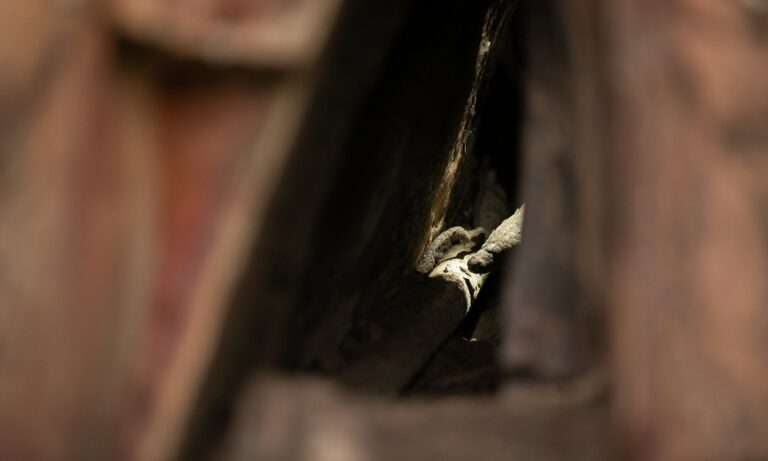
Peeking from a cave (Photo by Francois Meyer)
Success
This week, Paige’s tracking tags were finally removed, bringing her monitoring period to a close after just over a year. During the day’s fieldwork, the team caught a quick glimpse of the pup’s tail while it was still in the shelter, confirming that it is alive and well. During tag removal, Francois conducted a swift assessment of Paige’s condition, noting how well her injuries had healed and how much she had grown since her rescue.
It is remarkable to see how Paige has gone from an animal in dire condition to a thriving, strong, and healthy mother: all made possible through collaboration between passionate individuals and organisations working together for pangolin conservation.
Paige’s story is a powerful reminder of the difference that can be made when people take action and collaborate in conservation.
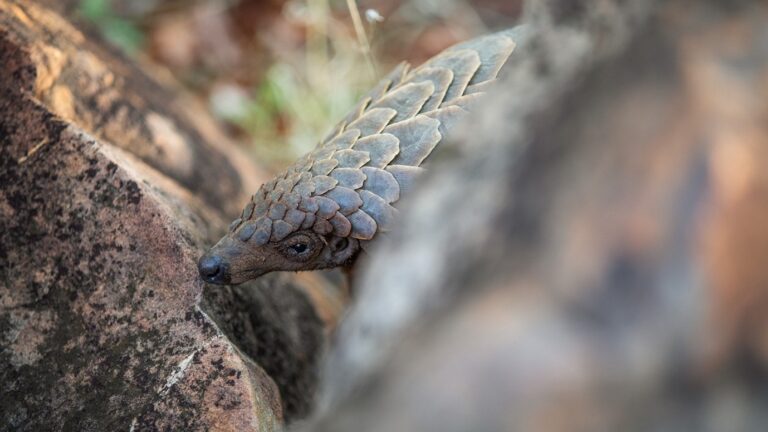
Inquisitive (Photo by Francois Meyer)
You can be a guardian
Because a wildlife crime was reported, intervention was possible, and a threatened pangolin’s life was saved. You can also become a guardian, whether you are with the Special Investigations Units of the Police; a whistle blower who reports illegal activities; a prosecutor who ensure sentencing of poachers and perpetrators; a veterinarian providing medical care; a rehabilitator taking care of pangolins while recovering; a scientist who guides reintroductions and conservation approaches; a landowner who secures valuable wildlife habitat; a policy-maker who ensures that we have the necessary legislative frameworks to protect pangolins; a member who reports pangolin sightings; or a donor, who provides funds and resources in support of pangolin conservation. Members of the SA Hunters and Game Conservation Association work in these areas as pangolin guardians – living out their commitment to these unique animals.
We encourage you to become involved, care and commit to conservation. Decide where you can make the biggest difference and remain vigilant, reporting any wildlife crime you encounter. For pangolin-related reports or enquiries, please use the contact details provided in this article.
Members can also use our App to report pangolin sightings observed in the wild, helping to build valuable data for future research and conservation initiatives. If you are fortunate enough to encounter a pangolin in the wild, please do not touch, pick it up or move it. Pangolins are territorial animals, and unnecessary interference puts them at risk.