
MEDIA RELEASE BY THE SA HUNTERS AND GAME CONSERVATION ASSOCIATION DATE:2026/06/03 For immediate release
SA Hunters asks the Concourt to strike vague definition from NEMBA
PRETORIA, SOUTH AFRICA – The South African Hunters and Game Conservation Association (SA Hunters/SAHGCA) appeared before the Constitutional Court on 26 May 2026 (Case CCT 270/24), seeking to strike down the vague and operationally unworkable definition of animal “well-being” embedded in the National Environmental Management: Biodiversity Act (NEMBA).
Holding Government Accountable
At its core, this case is a legal check on poor lawmaking. Parliament forced through a highly subjective, unworkable definition of animal “well-being” without consulting specialists in veterinary science, animal health, or wildlife management and without engaging the communities, industries and sectors most affected.
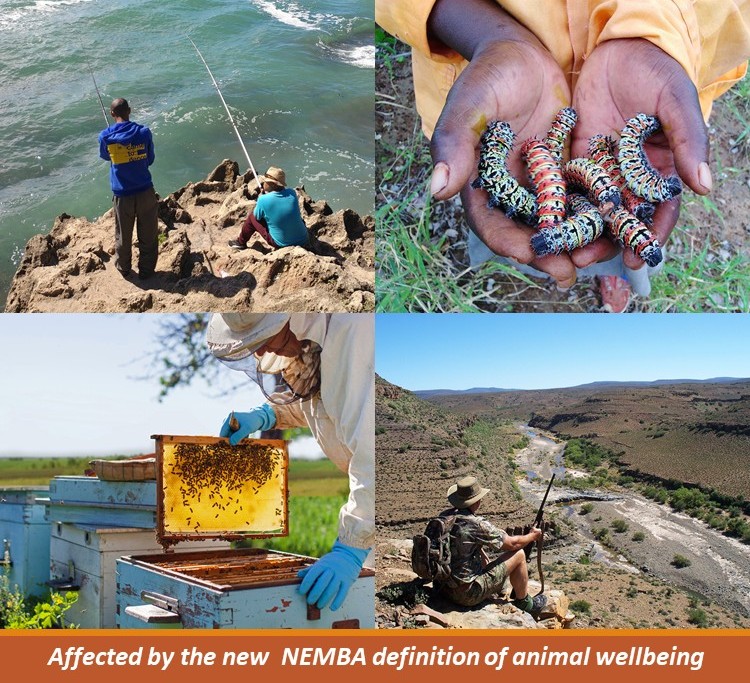
The consequences are far-reaching. Anyone who interacts with wildlife is affected: rural communities harvesting mopane worms or catching fish for food; wildlife managers conducting research or transporting animals; tourism operators; and the hunting, fishing, and agricultural sectors that feed the nation.
The Problem with the New Definition
The amended definition fundamentally changes the legal landscape for the wildlife sector. Because it is vague and lacks measurable standards, it leaves ordinary people legally exposed to prosecution and makes fair, objective enforcement impossible. It also creates serious administrative confusion by merging welfare responsibilities under the Department of Agriculture, while assigning new “well-being” responsibilities to the Department of Forestry, Fisheries and the Environment (DFFE), without distinguishing between the mandates of these two departments.
The new definition reads:
“Well-being means the holistic circumstances and conditions of an animal, which are conducive to its physical, physiological and mental health and quality of life, including the ability to cope with its environment.”
The original definition required assessment of an animal’s health based on its “living conditions”. It is an objective standard that regulators, operators, and the public could verify using established veterinary parameters: Is the animal free of disease? Does it have shelter, food, and water? Is it at a healthy body weight? Is it reproducing?
SA Hunters supports the original definition because it is grounded in welfare science and scalable across different wildlife species.
The new definition, by contrast, demands deep psychological and physiological monitoring of individual animals – even those in wild populations – using criteria that lack established scientific consensus or a measurable baseline across all animal types, from insects and fish to reptiles, birds, and mammals. Concepts like “mental health” and “quality of life” cannot be objectively assessed at scale.
One might be able to monitor the psychological well-being of a single zoo animal. One cannot do it for millions of wild animals living in ecosystems where starvation, predation, and competition are the natural order. The law cannot require people to do the impossible.
SA Hunters’ Record on Animal Welfare
Contrary to claims by groups such as the EMS Foundation and the NSPCA, this lawsuit is not an attack on animal welfare. SA Hunters has a long history of responsible wildlife management, funds welfare initiatives, and enforces strict internal codes of conduct. The organisation also won a landmark High Court case against the Department of Agriculture, blocking a plan to treat 45 wild species as farm livestock and to stop intensive commercial breeding and genetic manipulation for commercial gain.
Threats to Everyday Conservation and Industry
If the new definition is applied literally, routine and necessary activities could become unlawful. These include:
- Relocating wildlife to new reserves
- Managing populations in protected areas
- Dealing with damage-causing animals in communities
- Using collars on animals for research purposes
- Commercial fishing and agriculture
- Hunting and harvesting mopane worms for food
- Using pesticides to stop locust swarms from destroying crops
Anyone opposed to these activities could use the legislation to challenge them. Yet there is no objective standard by which anyone could prove they had adequately considered the mental state of every affected insect or animal. Developing such criteria for all animal types, from free-ranging antelope to invertebrates, is not scientifically achievable in the near future.
Legal Uncertainty and Unfair Decision-Making
The original definition gave regulators and citizens clear, practical compliance standards. The new definition creates substantial legal risk for everyone involved. How, for example, would a government official assess the “mental health and holistic circumstances” of wild animals when issuing a licence, without any objective criteria to guide them?
Ecosystems are complex. If an animal population expands within a fenced reserve, whose well-being takes priority: that of the overabundant species, or the other species suffering from habitat degradation as a result? The law provides no answer. This opens the door to officials either stalling decisions out of fear of prosecution or making entirely arbitrary ones, both of which violate the constitutional right to fair and predictable administrative action.
The Constitutional Case: Public Participation
A central pillar of SA Hunters’ argument is the protection of the democratic process. The South African Constitution requires public participation and inter-departmental alignment before new laws are enacted. Parliament failed on both counts. It did not consult the conservation, agricultural, fishing, or wildlife sectors before inserting this definition into law.
Significantly, neither the Minister of Forestry, Fisheries and the Environment nor Parliament actively opposed SA Hunters’ primary constitutional concern, which is an implicit acknowledgement that the process was flawed. Parliament itself conceded that its public consultation for the relevant amendment was insufficient. The Constitutional Court has previously ruled that Parliament cannot invoke the “late stage” or “cumbersome nature” of amendments to justify skipping public hearings. If a definition is materially altered, the public must be consulted again.
Economic and Conservation Impact
The real-world stakes are significant. South Africa has approximately 250,000 licensed hunters who sustainably harvest free-range protein. Together, local and international hunters contribute R44 billion to the economy annually. The broader wildlife and biodiversity sector supports over 418,000 jobs across ecotourism, game ranching, hunting, and conservation. The fisheries sector generates roughly R6 billion in annual turnover, employs over 27,000 people directly, and supports hundreds of thousands more through indirect employment and food security.
Beyond economics, legally regulated hunting funds the financial sustainability of private nature reserves and game ranches. That revenue supports habitat maintenance, anti-poaching programmes, and species conservation. If routine game management becomes too risky, landowners may revert to livestock farming, thereby destroying wildlife habitat.
Regulatory Overreach
SA Hunters acknowledges that South African courts have already recognised the link between animal welfare and conservation. However, those in favour of the new well-being definition, as defined in the impugned provisions, argues that “well-being” is distinct from “welfare”, the term consistently used in existing law. Yet when asked to explain this difference, welfare terminology and criteria is used. The Department of Agriculture already holds the statutory mandate to oversee animal welfare. By embedding welfare-style definitions into conservation legislation, DFFE has created overlapping and conflicting mandates that generate administrative chaos.
What SA Hunters want
SA Hunters has asked the Constitutional Court to declare the new “well-being” provisions unconstitutional and strike it from the law, alternatively, to suspend the provision and compel a proper, inclusive public consultation process. Any such process must also clarify the respective mandates of the Department of Agriculture and DFFE to prevent ongoing regulatory confusion.
SA Hunters looks forward to a judgment that protects both the practical realities of conservation and every citizen’s constitutional right to participate in the making of laws that govern citizenry.
The End
Issued by the South Africa Hunters and Game Conservation Association (SA Hunters)
Editorial enquiries: Lizanne Nel – Conservation Manager (lizanne@sahunt.co.za / +27 (0)12 808 9313)
Magda Naude – Independent Media Consultant (magda.naude@gmail.com / 27 (0) 82 452 5878)
Website: www.sahunters.co.za