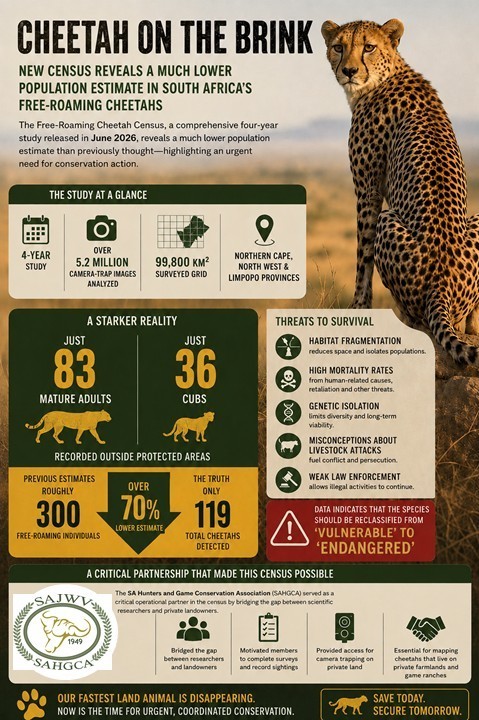
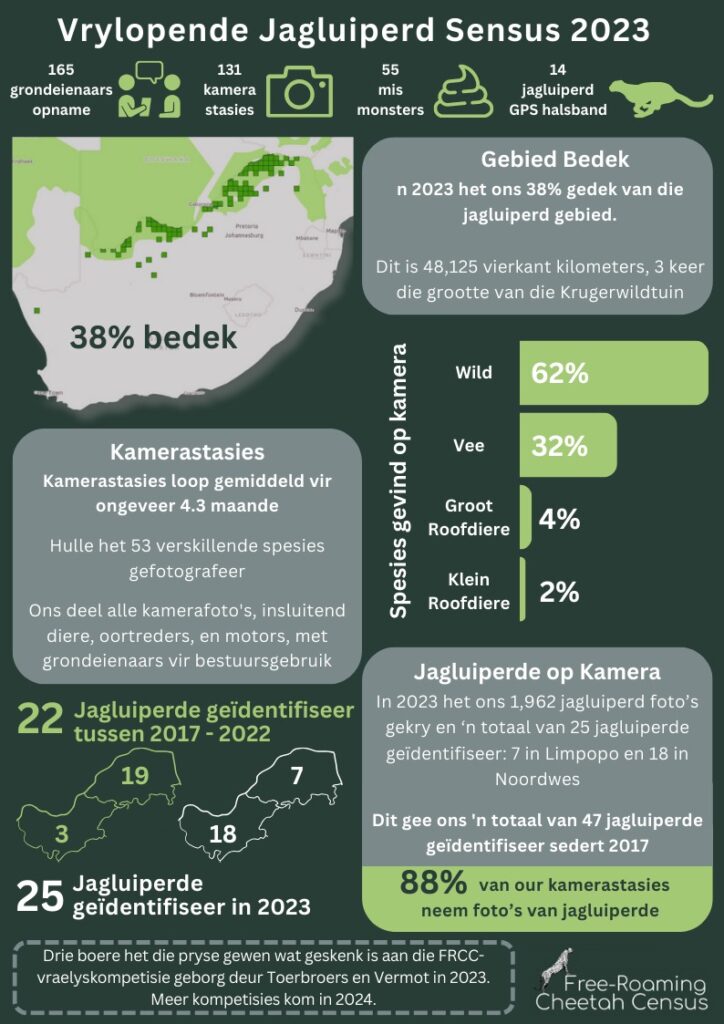
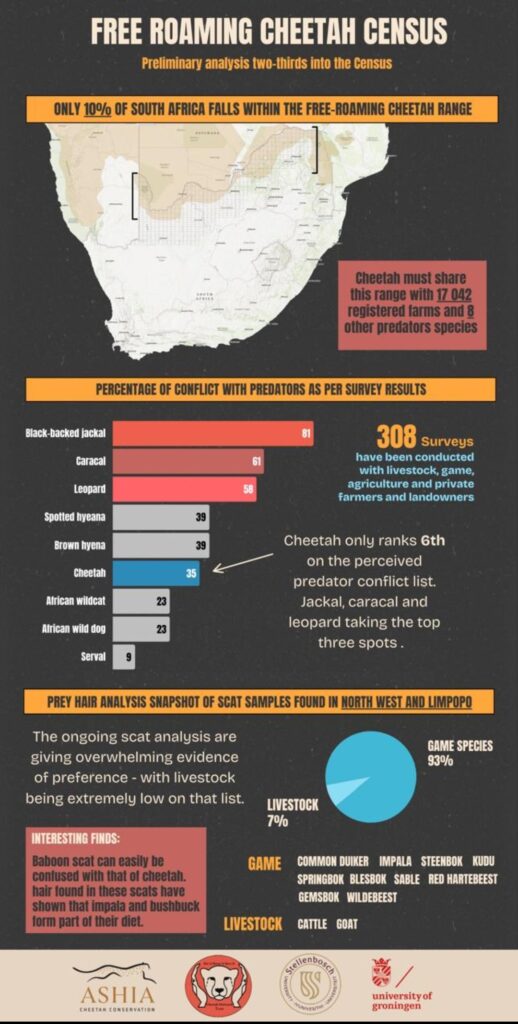
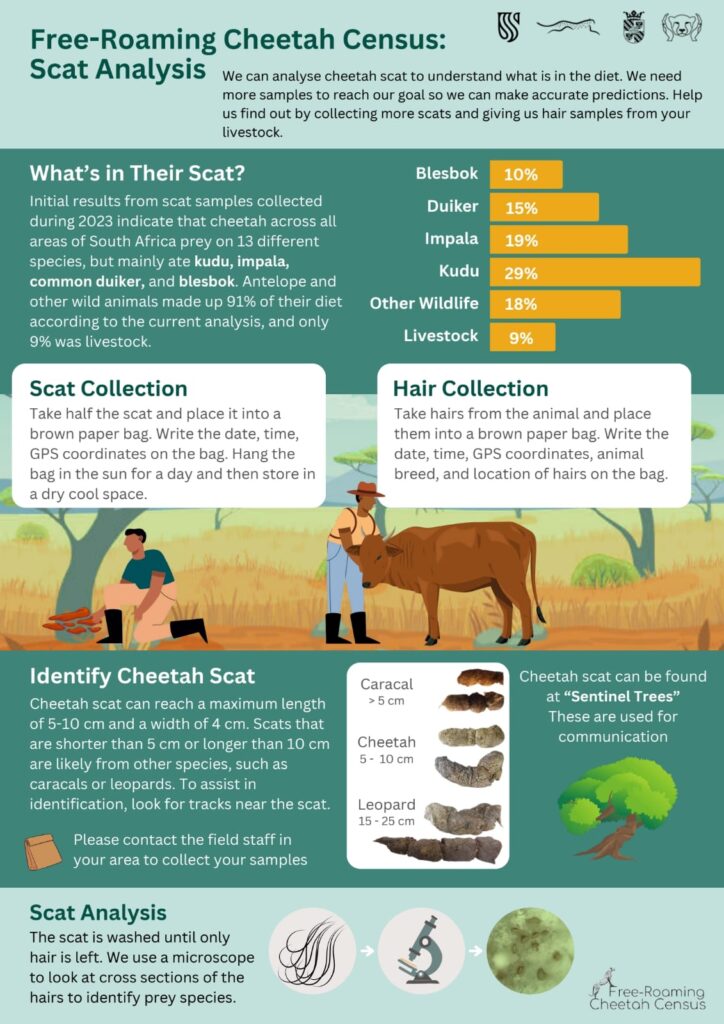
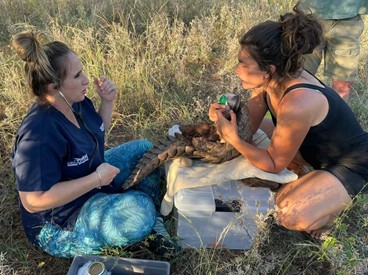
The SA Hunters and Game Conservation Association (SAHGCA) served as a critical operational partner in the Free-Roaming Cheetah Census that was completed in 2026. The census, a comprehensive four-year study, revealed a much lower estimate of South Africa’s free-roaming cheetah population than previous estimates. Conducted by Ashia Cheetah Conservation, the Cheetah Outreach Trust, and the University of Groningen, the survey analysed over 5.2 million camera-trap images across a 99,800-square-kilometre grid in the Northern Cape, Northwest, and Limpopo provinces, and the numbers reveal that previous figures were overestimated by approximately 70%. According to the study, only 83 mature adults and 36 cubs were recorded outside protected areas, shattering long-held conservation assumptions that estimated a stable population of roughly 300 free-roaming individuals. Only a small number of adults and cubs were identified by camera traps. High mortality rates and habitat fragmentation are threatening their survival. The study recommends that the species should be reclassified from Vulnerable to Endangered.
Further problems include genetic isolation, misconceptions about livestock attacks, and weak law enforcement, all of which require urgent, coordinated conservation. SA Hunters contributed to the census by bridging the gap between scientific researchers and private landowners. Because free-roaming cheetahs predominantly live on private farmlands and game ranches where researchers lack automatic access, the association’s involvement was vital to mapping the population. Members were motivated to complete surveys, record sightings, and collaborate to provide access for camera trapping.
SA Hunters and its members participated in several direct actions:
Citizen Science Tracking: Members used the dedicated SA Hunters “Sightings” mobile app and specialised WhatsApp networks to log verified, real-time cheetah sightings and geographical coordinates.
Data Collection Questionnaires: Members completed detailed online questionnaires regarding local predator numbers, cheetah behaviour, and prey preferences on their lands.
Land Access Facilitation: Landowners and game ranchers gave researchers formal permission to access their properties to deploy specialised camera traps at known cheetah scent-marking posts.
Human-Wildlife Conflict Management: The association partnered with the Cheetah Outreach Trust to establish local task teams, providing capture cages and training to safely manage and translocate cheetahs experiencing conflict with livestock.