

Inhoudsopgawe
Majuba-Branch actively protecting Sungazers
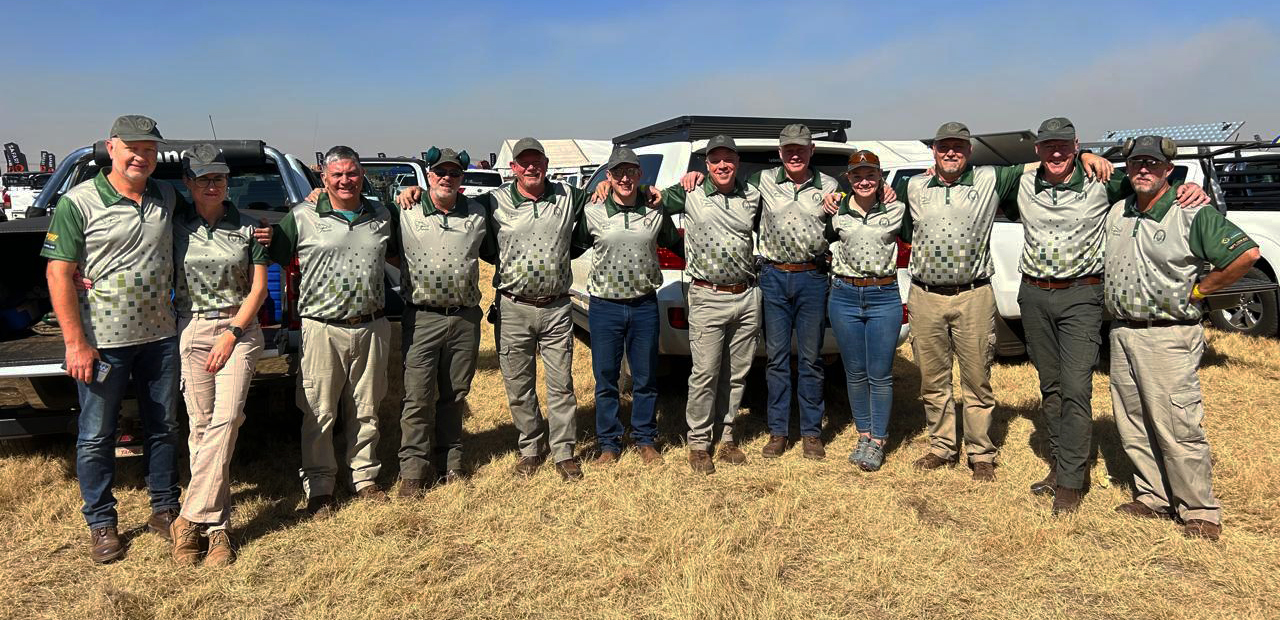
The Majuba Branch serves members in the Volksrust area of southern Mpumalanga. It was originally established by a group of keen hunters, reloaders, and sport shooters who had started a club to compete in an organised manner. With time, the club evolved into the Majuba Branch of SA Hunters.
During the environmental impact study for the construction phase of the Majuba Power Station, a need was identified to relocate sungazers to a safe habitat.
A few members were involved in constructing the Majuba project and establishing the nature reserve. Since then, the Majuba Branch and its members have been actively involved in the management and day-to-day activities of the reserve. We are privileged that the species are well distributed in our area and that quite a few established populations occur on private farms.

The Majuba Nature Reserve
The Majuba Nature Reserve was proclaimed on 30 July 1986. Other than the lizards that occur naturally, other sungazers have been relocated successfully to the reserve where there are currently 180 occupied burrows.
The four main objectives of the Majuba Power Station Nature Reserve are:
- Conservation
- Education
- Recreation
- Research
Identification
The giant girdled lizard (Cordylus giganteus, is an unusual cordylid because it is completely terrestrial. It inhabits the highveld grasslands of South Africa in parts of Mpumalanga, Free State and Kwa-Zulu/Natal provinces. Until recently, the known distribution of Cordylus giganteus was the north-eastern Free State with one unsubstantiated record from Vereeniging in Gauteng.
Common names:
English: Sungazer, Giant Girdled Lizard, Lord Derby’s Lizard
Afrikaans: Ouvolk, Reuse gordelakkedis, Sonkyker, Skurwejantjie.
Zulu: Mbedhla
Sungazer, the largest cordylid species, measures up to 40 cm and is heavily armoured with large, keeled spiny scales. The spiny scales on the neck, sides and tail are characteristic of the sungazer. The dorsal part of the head, body and tail in adult specimens is usually a dirty dark brown colour. The scales on the neck and back are dark brown to light brown on the dorsal side and straw-coloured/yellow underneath, often infused with grey. The neonates and juveniles are more colourful with dark brown and yellow-orange crossbars on the legs, back, sides and tail. The ventral parts are pale yellow, and the distal portion of the tail is usually orange-red.

Food
Sungazers consume substantial amounts of insects such as grasshoppers, beetles and termites. However, they are opportunistic feeders that will even eat plants albeit unintentionally.
Distribution
The Sungazer is endemic to the grasslands of the north-eastern Free State, Mpumalanga and the western parts of KwaZulu-Natal. They are usually found in rolling grassland with occasional dolerite outcrops. They do not occur anywhere else in the world. Sungazers are diurnal and live underground. When the soil is soft, they dig burrows of approximately 2,5 meters long inclining downwards to a depth of 45 cm below the surface in areas that do not become waterlogged. The lizards enter the burrow head first. Once inside the burrow, they are unable to turn around. They must reverse from the burrow to exit, relying on their strong, spiny tails to deter any would-be predator. They can simultaneously tilt their heads and jam the occipital spines into the roof of the burrow to anchor their position, making them impossible to remove.
Shortly after sunrise the lizards emerge from their burrows and lie basking, usually with the front part of the body raised on outstretched legs, always looking out for possible predators. If approached, they turn and flee into their burrows. They will avoid people, but once they become used to human activity one can get very close to them, especially from a vehicle. They live for over ten years. The female is viviparous and gives birth to 1-3 young every second year. Predation on the young by e.g., the Black-headed heron and the Yellow mongoose results in very few surviving to reach sexual maturity.
Because this species is mainly found on the rolling highveld grasslands it is particularly vulnerable. Habitat modification either destroys entire communities or reduces the populations to such an extent that their long-term survival is affected.
Agriculture and Industry
Sungazers’ habitat is the preferred agricultural region for growing sunflower and maize. Although the area also supports many cattle and sheep, which are compatible with the continued existence of the lizards, the cultivation of Eragrostis curvula, a monoculture used to feed livestock in winter, destroys large areas of natural habitat, subsequently threatening the survival of this species. There are no records of recolonisation of the lizards from these areas.
Many farmers create firebreaks on their properties to protect the natural veld during winter. These firebreaks consist of ploughed strips of land between 10 and 20 metres wide where the soil has been turned over to bury the combustible grass layer. This process also destroys animals living below the surface by burying them alive, especially species such as sungazers.
The rolling highveld grasslands are also home to some of our richest coalfields where coal is mined for power generation. The required infrastructure such as roads, railway lines, pipelines, construction sites, housing and people result in severe habitat destruction.
Conservation
Until now, breeding this species in captivity has been unsuccessful. It is possible that captive breeding programmes could succeed in the future once more information about reproduction under natural conditions becomes available. Nevertheless, habitat availability might be the main limitation in the future. Rehabilitation of sungazer breeding programmes would have little effect if the natural environment had been destroyed.
Species survival depends mainly on the conservation of their natural habitat. Previously, too much emphasis has been placed on saving the animal which often resulted in the unnecessary excavation and relocation of lizards without any sound ecological knowledge of the animals’ needs.
Considering the above, it is clear that Cordylus giganteus is widely misunderstood. Ignorance and the destruction and loss of their habitat are unintentionally killing them.