

Author: André van der Merwe (SA Hunters Manager: Branch and Shooting Matters)
Note: In this article, reference is made to hunting rifles only, but the principles of firearm safety apply to all types of firearms.
Table of contents
Firearm safety: first impressions
Professional hunters often talk about that first moment when they see a new client handle a rifle. Within a few minutes, they know whether the upcoming hunt will be a pleasure, a trial, or even life-threatening. According to experienced professional hunters, there is relatively little risk in hunting one of the Big Five. The predominant and ever-present danger is that of a shooting incident, where the hunter is the cause of the problem. According to professional hunters, there is a fairly good chance that you could get shot if you end up in the field with the wrong hunter! Stories of a “terrifying moment” when a shot “went off accidentally” are plentiful around the campfire.
When you see someone handle a firearm for the first time, assess the person’s firearm safety based on the following four general rules.
- Rule 1: All firearms are always loaded. No one should ever assume that any firearm they see, or handle is not ready to fire. When a “safe” firearm is handed to you, ensure sure that it is indeed safe by checking that the bolt is open and there are no cartridges in the chamber or magazine.
- Rule 2: Never point a firearm at anything you do not intend to destroy. The fact that it is not loaded makes no difference to this rule. See rule 1. Always be aware of the direction in which your weapon’s muzzle is pointing.
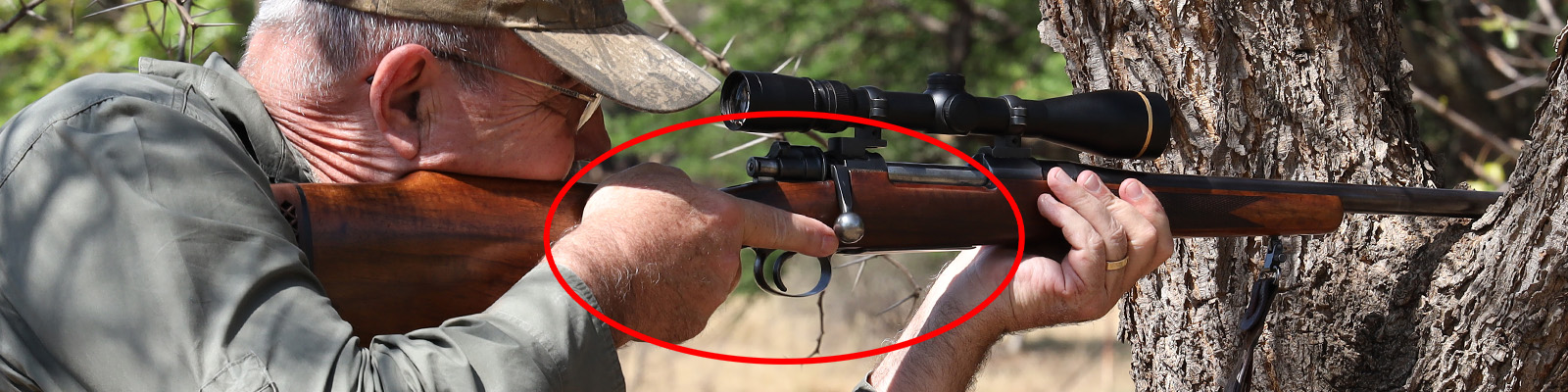
- Rule 3: Keep your finger off the trigger until your sights or scope are on the target. Firearms do not go off by themselves; someone pulls the trigger! A competent shooter keeps his finger alongside the trigger guard until he has confirmed his target. Violations of rule 3 are responsible for more than 80% of all shooting incidents.
- Rule 4: Confirm your target! Never shoot at something you have not positively identified. Never shoot at a shadow, sound, silhouette, or anything you cannot see and identify. Make sure you know what is behind your target. What will happen if the bullet misses or penetrates the target?
These general rules for firearm safety apply on the shooting range, during transport, at home, when cleaning your weapons, while hunting, or in self-defence when your life is threatened (e.g., an intruder in your home). If everyone always applied these four rules, there would be no shooting accidents. Negligence causes shooting incidents.
The privilege of owning a firearm
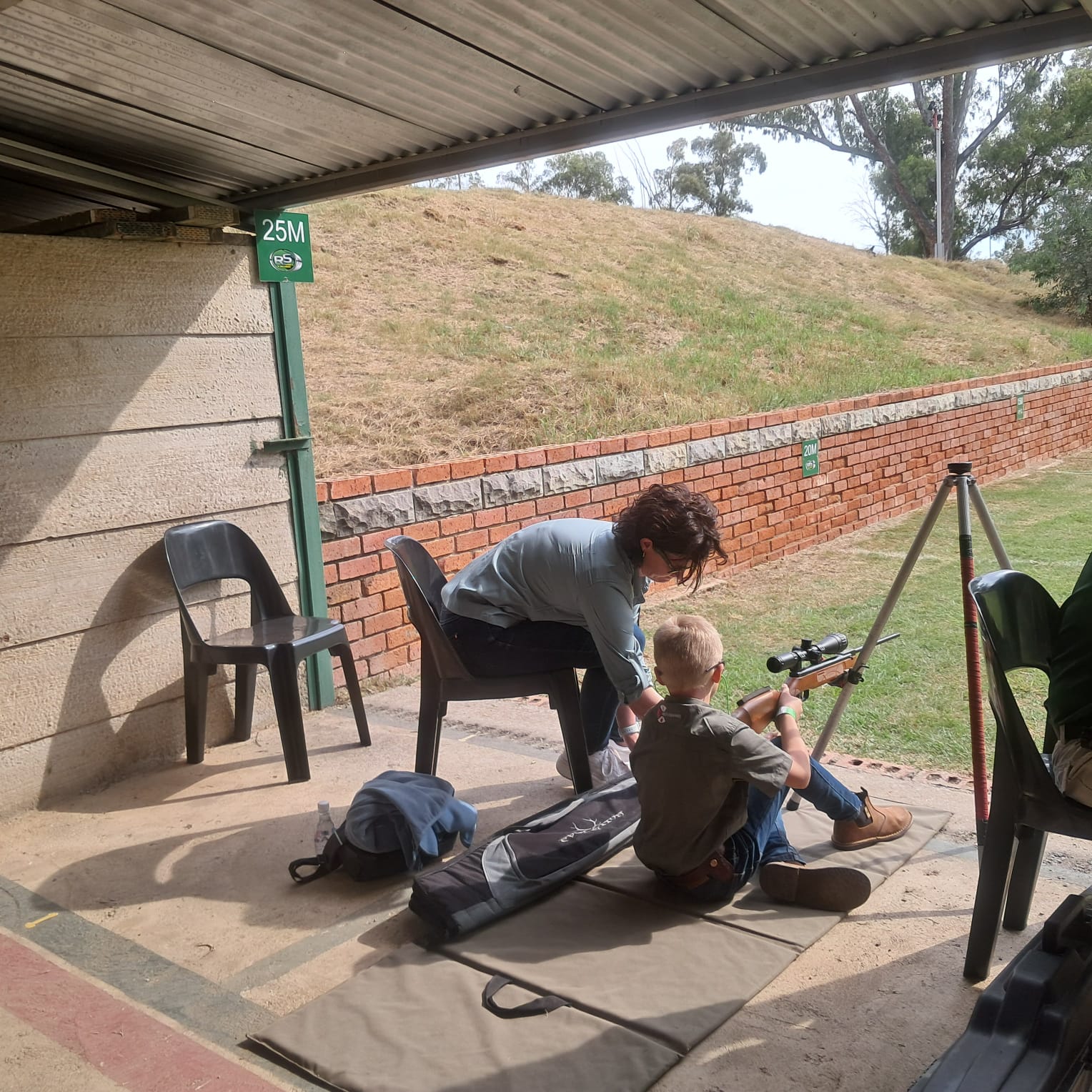
Owning a firearm comes with responsibilities that the owner must accept unconditionally. You are always responsible for its use — whether you use it yourself or when someone else does. A responsible firearm owner’s firearm is always locked in a gun safe, under their supervision and never left unattended, e.g., in a vehicle, at the shooting range when the shooter inspects the target, or in any place where children could get hold of it. It is a privilege to introduce children and adults to the responsible handling and use of firearms, as long as it is done by a legal firearm owner. Children should only handle firearms under the supervision of the firearm owner and with their parents’ permission.
Just as obeying traffic rules, the safe handling of firearms depends on competence and attitude. Negligence and often a careless attitude cause shooting incidents. Sometimes experienced shooters cause accidents because they do not pay attention to what they are doing. It is certainly not just beginners who make mistakes or cause accidents! The old saying “familiarity breeds contempt” is often the reason for this. Due to the repetition of certain actions over a very long period, handling firearms becomes second nature, and people tend to become complacent and careless. The handling of a firearm should never become a routine where basic safety measures are ignored.
The following is an important extension to the four general rules of firearm safety
Maintain your firearm in a reliable, working condition
While adhering to the four safety rules, it is equally important that the firearm is reliable and in good mechanical working order. Any part of the firearm can be faulty, e.g. the safety catch or trigger. Therefore, there are only two safety mechanisms you can rely on: a well-trained trigger finger (see rule 3 above) and common sense (adhering to the four general rules for firearm safety explained above).
A well-trained trigger finger
Observe shottists at the shooting range to see where they keep their trigger finger after the action has been closed. The trigger finger must be kept next to the trigger guard. The trigger finger only touches the trigger for 2 to 3 seconds before the shottist squeezes the trigger. Often a shottist’s finger will be on the trigger while he/she is still settling down in the shooting position, long before he/she is ready to shoot. That is when unplanned shots are fired! Rule 3 above refers to 80% of shooting incidents caused by trigger fingers being in the wrong place at the wrong time and when the shottist touches the trigger prematurely.
Triggers that are too light to the touch
There is a trend among hunters and particularly competition shottists, to set the rifle’s trigger to respond to a very light touch to fire the shot. Rifles with very sensitive triggers, sometimes fire when the cuff of a long-sleeved shirt or jacket brushes against it when the bolt is closed. When the trigger of a rifle is unstable, it is mechanically faulty and extremely dangerous. Knowingly using such a rifle is tantamount to negligent behaviour and the owner should not use the rifle until a competent gunsmith has fixed it. It is standard practice for the triggers of hunting rifles should be set at a minimum of 1 200 grams (this is correct, 1,2 kg!). To put this into perspective: the trigger of a handgun used for self-defence is set between 1.8 en 2.7 kg to avoid a shot from going off unexpectedly because of trigger sensitivity.
Safety catch
A safety catch should never give a false sense of security. The trigger finger must always be next to the trigger guard until you are ready to fire the shot. The practice of pulling the trigger while closing the bolt on a bullet in the chamber is dangerous! The firing pin now rests against the primer and a blow to the rifle butt on a surface such as a rock or the floor of a hunting vehicle, is sufficient to overcome the inertia of the firing pin spring, resulting in an unexpected shot being fired.
A clean barrel and action, using the correct calibre ammunition
The barrel and action must always be clean before firing a shot. Any obstruction in the barrel e.g., water/excessive oil or mud is dangerous and can damage the rifle and/or cause injuries to the shottist when a shot is fired. If water or dirt gathered in the barrel for example while hunting, clean the barrel properly before using it again.
Ensure that you have the correct calibre ammunition for your rifle before leaving camp, especially if there are a few hunters using different calibre rifles and ammunition in the same camp. A .308 Winchester cartridge fits in the chamber of a .25-06 Remington (and a .270 Winchester) rifle. When firing the shot, a .308 calibre bullet is forced through the barrel of a .257 or .277 calibre rifle creating a dramatic increase in chamber pressure. This will damage the rifle and may injure the shottist and bystanders. Ensure that you use the correct ammunition. Do not let individual cartridges lie around but store them safely in clearly marked plastic or paper ammunition containers.
Reloaded ammunition
Use only ammunition reloaded specifically for your rifle. Do not use ammunition reloaded for another rifle in the same calibre as your rifle. It is important to understand that the ammunition reloaded for a rifle is custom-made for only that rifle.
Firearms in the hunting camp
Always ensure that rifles are made safe when transporting them from the hunting area or shooting range back to the camp, home or to any other location by removing all ammunition from the rifle. Hunting destinations are being targeted by criminals. Many hunting destinations have firearm safes. The law requires that you lock you rifles away safely.
Identify the target before shooting
Identify your target before you shoot! Humans and animals have been killed because the hunter did not make sure of his target. Remember, when you pull the trigger you are responsible for the result!
Important rules about handling a loaded rifle
- Never embark or disembark a vehicle with a loaded rifle. Always check with your hunting companions that all the firearms on the back or the inside of the vehicle are in a safe condition.
- Never climb through a fence or in a tree with a loaded rifle. The shottist must always be in full control of his firearm. When you are busy with other tasks, such as climbing a tree or through a fence, you compromise control over the firearm. In that situation a loaded rifle is a deadly companion!
- Never pull a rifle by the barrel towards you. You will be breaking Rule 2 – never aim a firearm at any object that you do not intend to shoot – because you will be directing the rifle barrel towards yourself!
Never shoot at a hard surface or into water
Never shoot at a hard surface or at water. The bullet can ricochet and hit someone. When target practising, always ensure that there is a suitable sand bank to absorb any bullets. This also applies while hunting when hunters shoot in the heat of the moment without checking what is behind the target. This is a problem on smaller hunting farms where there could be people or buildings in the background. A hunting rifle is potentially dangerous for up to 5 km, depending on the calibre. Even a ricochet bullet from a light .22 rimfire rifle poses a threat for up to 1,5 km.
The use of alcoholic drinks and other narcotics while handling firearms
It is an offence to handle a firearm (air rifles included) while under the influence of any substance that might have intoxicating or sedating effects.
See the Firearms Control Act (Act 60 of 2000) – Section 120 (4). SA Hunters and its branches adhere to the conditions of the Act and therefore do not allow any alcoholic or narcotic substances on shooting ranges under their control. Any person driving under the influence of alcohol or a narcotic substance and anyone handling a firearm while under the influence of such substances poses an unacceptable risk to him or herself and those around them.
Choose your hunting companions with care
On the shooting range the range officers ensure that everyone abides by the rules. Hunting is a completely different story. Choose your hunting companions carefully. Unsafe handling of a firearm should not be tolerated. Anyone who is guilty of careless handling of firearms should be reprimanded in no uncertain terms. A hunting companion, who disagrees and does not accept responsibility for his behaviour, is a shooting accident waiting to happen. You could be the victim! Earn the respect and appreciation of others by acting impeccably when handling a firearm.
Shooting ranges without range officers
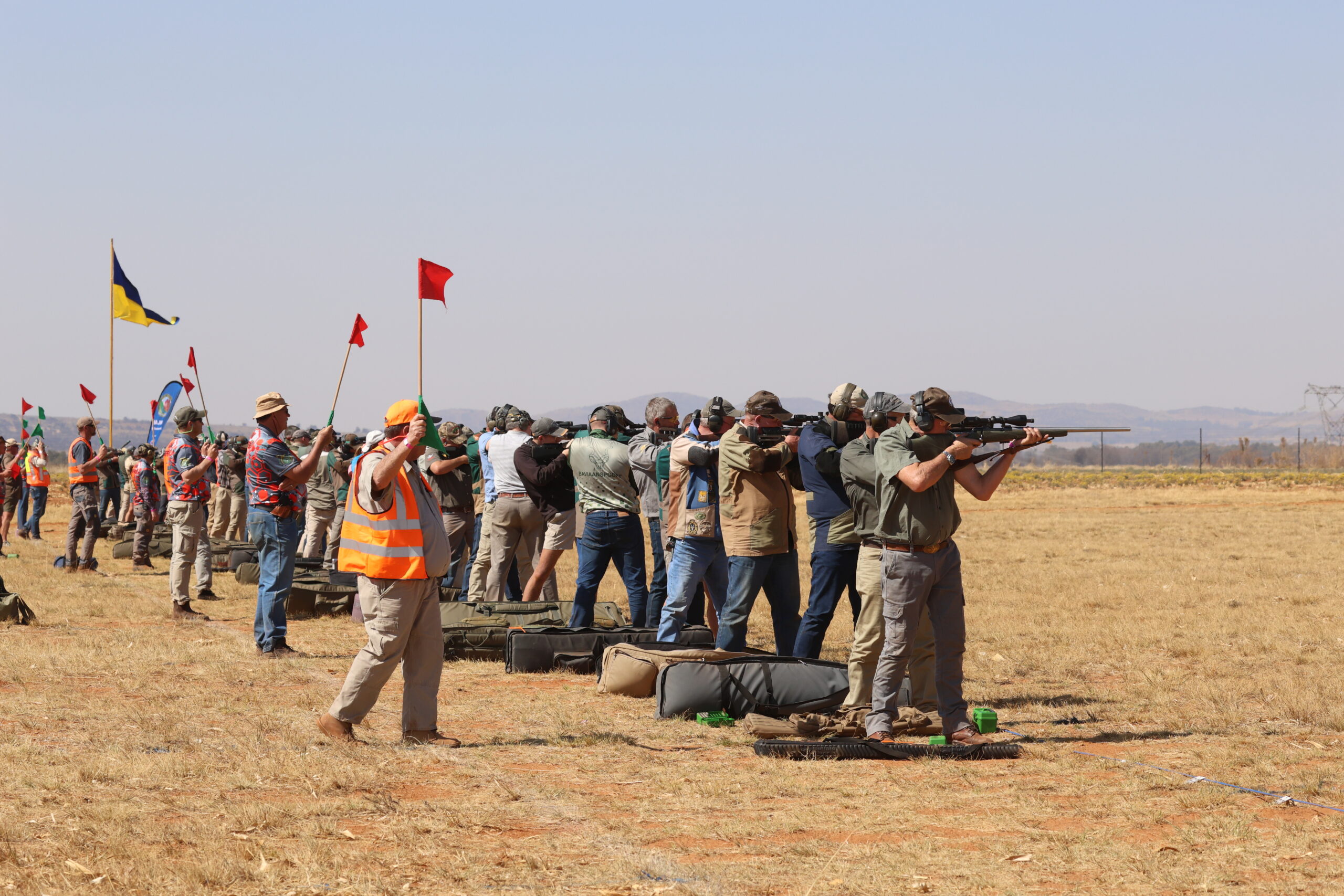
Situations may arise where a group of hunters are sighting their rifles at an informal range before they go hunting. To ensure order and safety on the shooting range the group of hunting friends should agree on the following:
- Assign a senior and experienced person as the range officer to control activities. Everyone must accept his authority and follows his instructions unconditionally and immediately.
- No person under the influence of alcohol or narcotics may enter the shooting range and no alcohol may be consumed during the shooting exercise.
- Firearms should arrive at the shooting range unloaded in a purpose-built bag or case.
- Firearms may only be removed from their bag or case at the direct command of the range officer at the firing line and must always be pointed in a safe, i.e. down-range direction.
- Firearms may not be handled on the firing line while any person is in front of the firing line;
- Firearms declared safe must be in bags or cases when leaving the shooting range.
Ear and eye protection is mandatory.
Your choice as a responsible firearm owner
As a responsible firearm owner, you will come across others who do not practise firearm safety. it is your choice to react or not. If you decide to do nothing, you neglect your duty and will blame yourself if something goes wrong and someone gets injured or killed because of negligent behaviour. You could also be the victim of such behaviour!
Only with an attitude of no compromise and proactive behaviour towards transgressors, will you be safe with your shooting or hunting companions. A person who persists with unsafe behaviour and refuses to act appropriately must be informed by his peers that he is not welcome in their company on the shooting range or when hunting. Do not be afraid to offend someone guilty of improper behaviour. It is your responsibility to act decisively and correctly or someone, maybe you, will suffer the consequences. When someone is hurt or killed, it is too late for tears or excuses!
Firearm safety is in everyone's interest!
About the author
André van der Merwe is a dedicated consumptive hunter who has nurtured his passion for hunting over the past 60 years. During the last three decades, he competed regularly in hunting rifle and field shooting competitions. In 2006, he joined SA Hunters as the Manager, Branch and Shooting Affairs, to support the association’s 83 branch committees. As secretary of the shooting committee, he coordinates shooting activities at branch, regional, and national levels, and promotes and stimulates sport shooting. His commitment to mentoring the next generation of firearm owners, shottists, hunters, and custodians of our natural and cultural heritage is at the heart of his legacy. Read André’s biography here.