

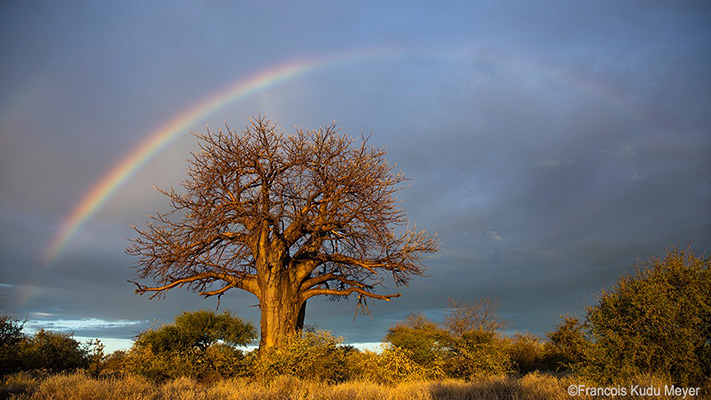
Baobab trees (Adansonia digitata) live for hundreds of years and play an important role in the ecology of savannas. These giants of the bushveld provide shelter and collect water in the cavities between their branches, while their flowers and fruit serve as food for many animals. The tree can be considered a unique mini-ecosystem. Baobab trees are also well known among hunters, who often rest in their shade or use them as landmarks while hunting because they tower above other trees.
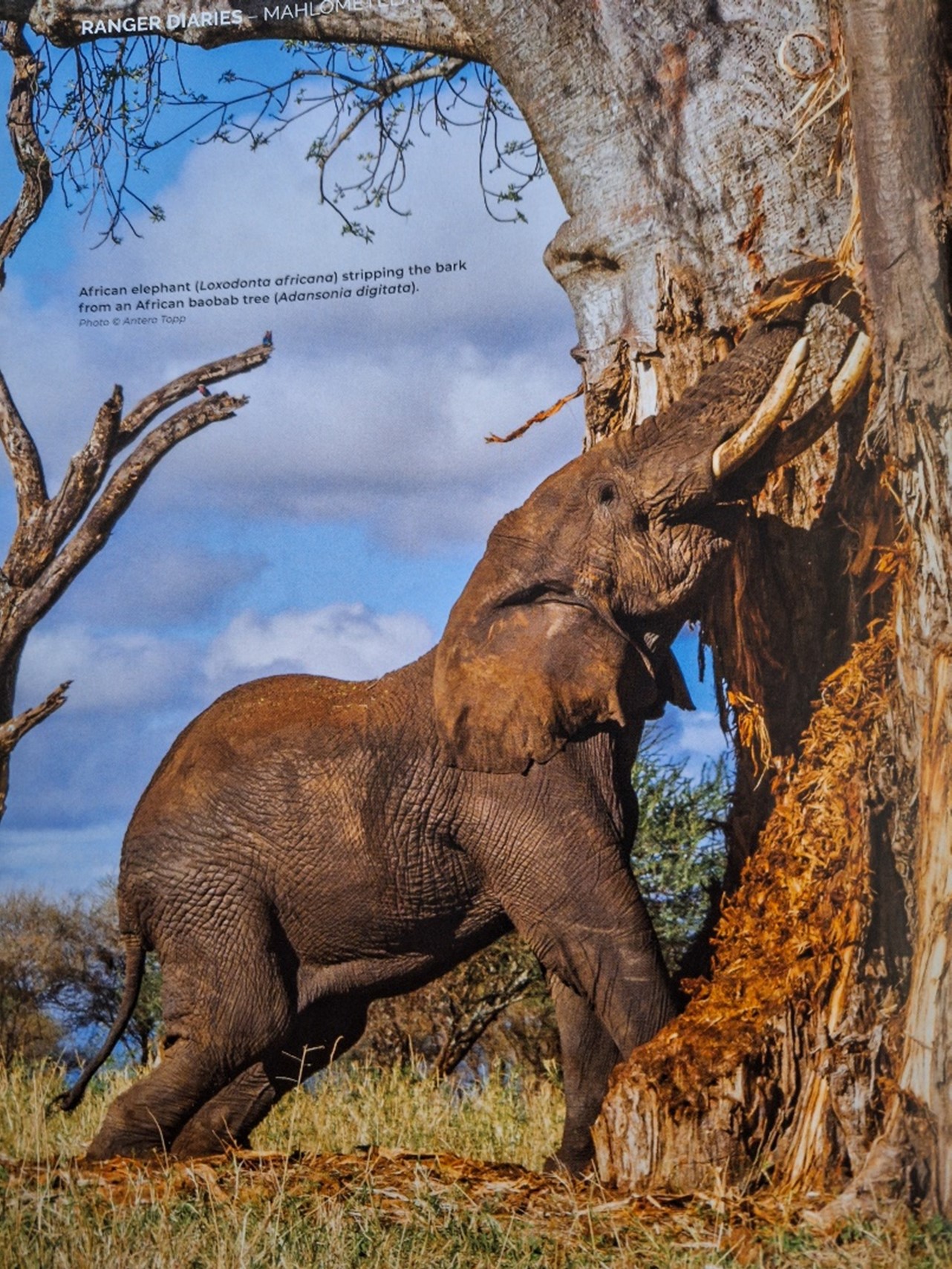
Baobab trees play an important role in the life of another giant of the bush – the elephant – which eats the juicy young branches and leaves and strips the tree’s fleshy bark for food during droughts. In a healthy ecosystem, the baobab trees recover, and new bark grows over the damaged areas. The elephants’ use of the trees contributes to their exceptional growth patterns and knobby, thick trunks.
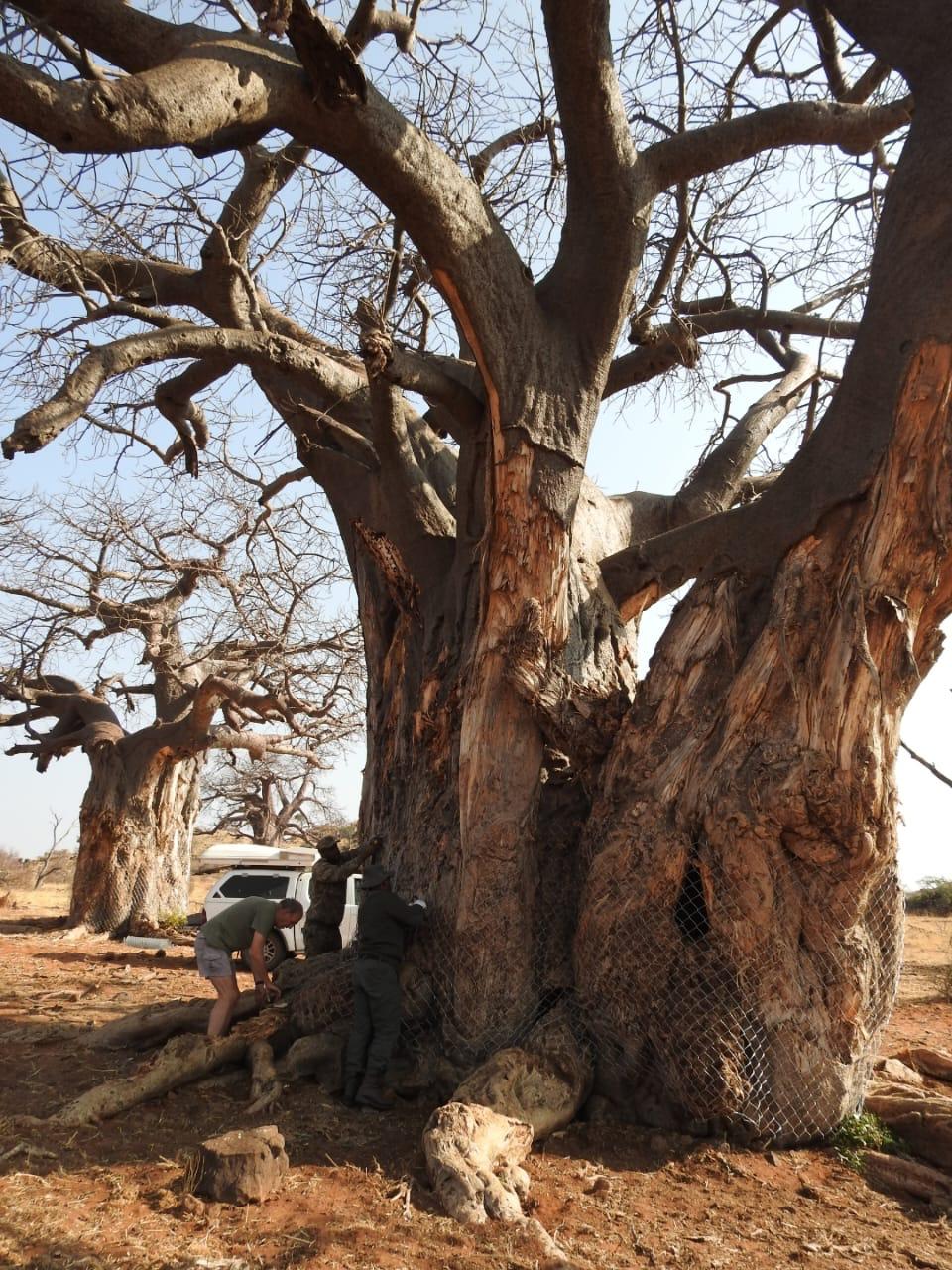
Where the extent and frequency of elephant impact become too great, baobab trees do not get a chance to recover from tissue damage. This restricts the flow of nutrients to the rest of the tree, eventually causing it to die. With the unprecedented increase in elephant numbers in Southern Africa, this trend is visible in parts of Botswana, Zimbabwe, and South Africa. This unprecedented rise in elephant populations is the result of policy decisions that have drastically reduced or eliminated the control of elephant numbers through regulated hunting and culling operations.
With the increase in elephant numbers, competition arises between species for food and space. Drought conditions in countries north of South Africa place added pressure on baobab trees and other species in especially Mapungubwe Transfrontier Park and the northern part of the Kruger National Park
The situation in Botswana is of great concern as herds of elephants migrate southward across the Limpopo River into South Africa. Their first stop is Mapungubwe National Park on the border between South Africa, Botswana, and Zimbabwe. This area is part of a larger World Heritage site. Apart from the famous golden rhino figurine associated with Mapungubwe, this park is regarded as the “Valley of the Kings” for its giant baobab trees.
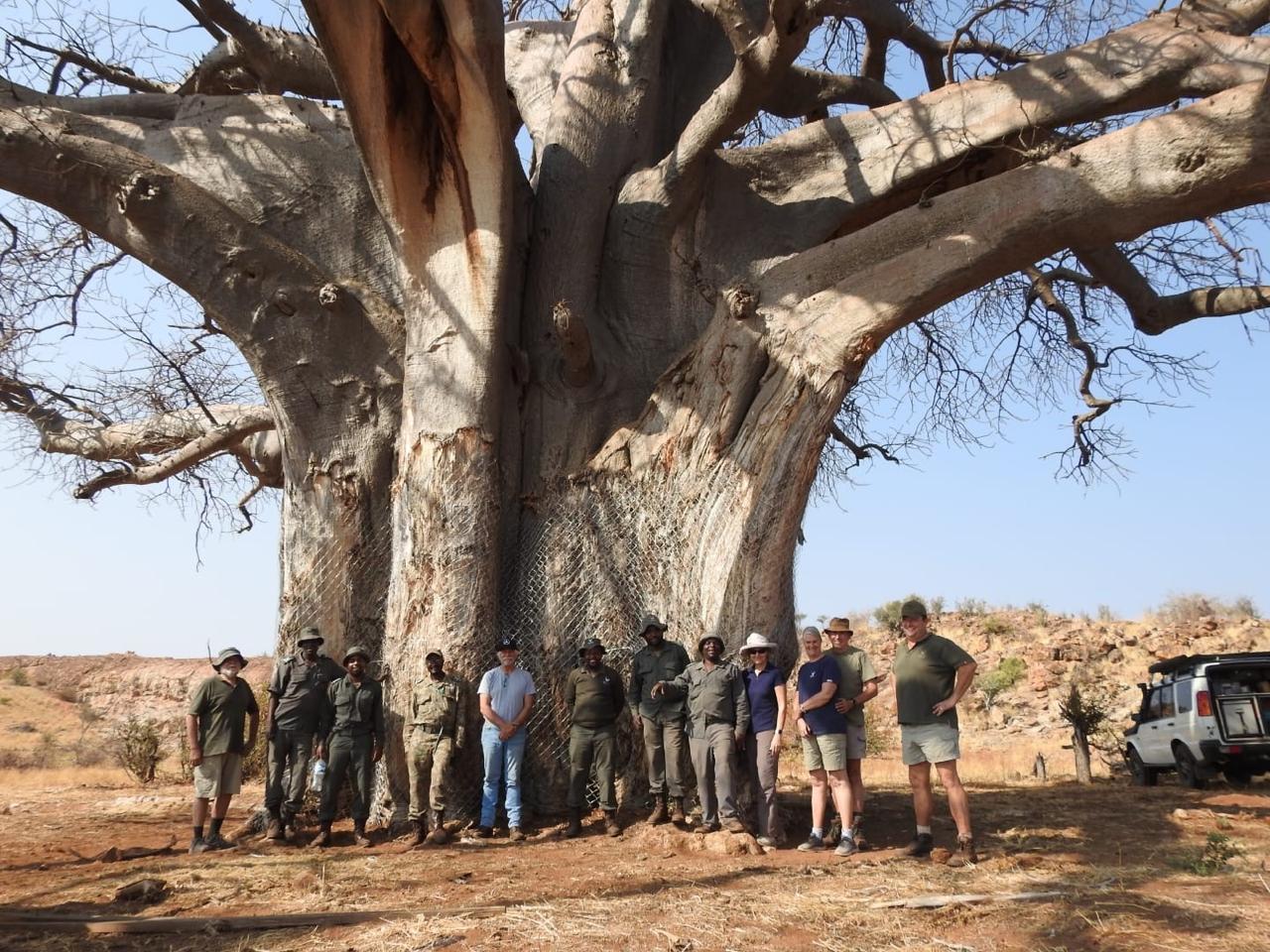
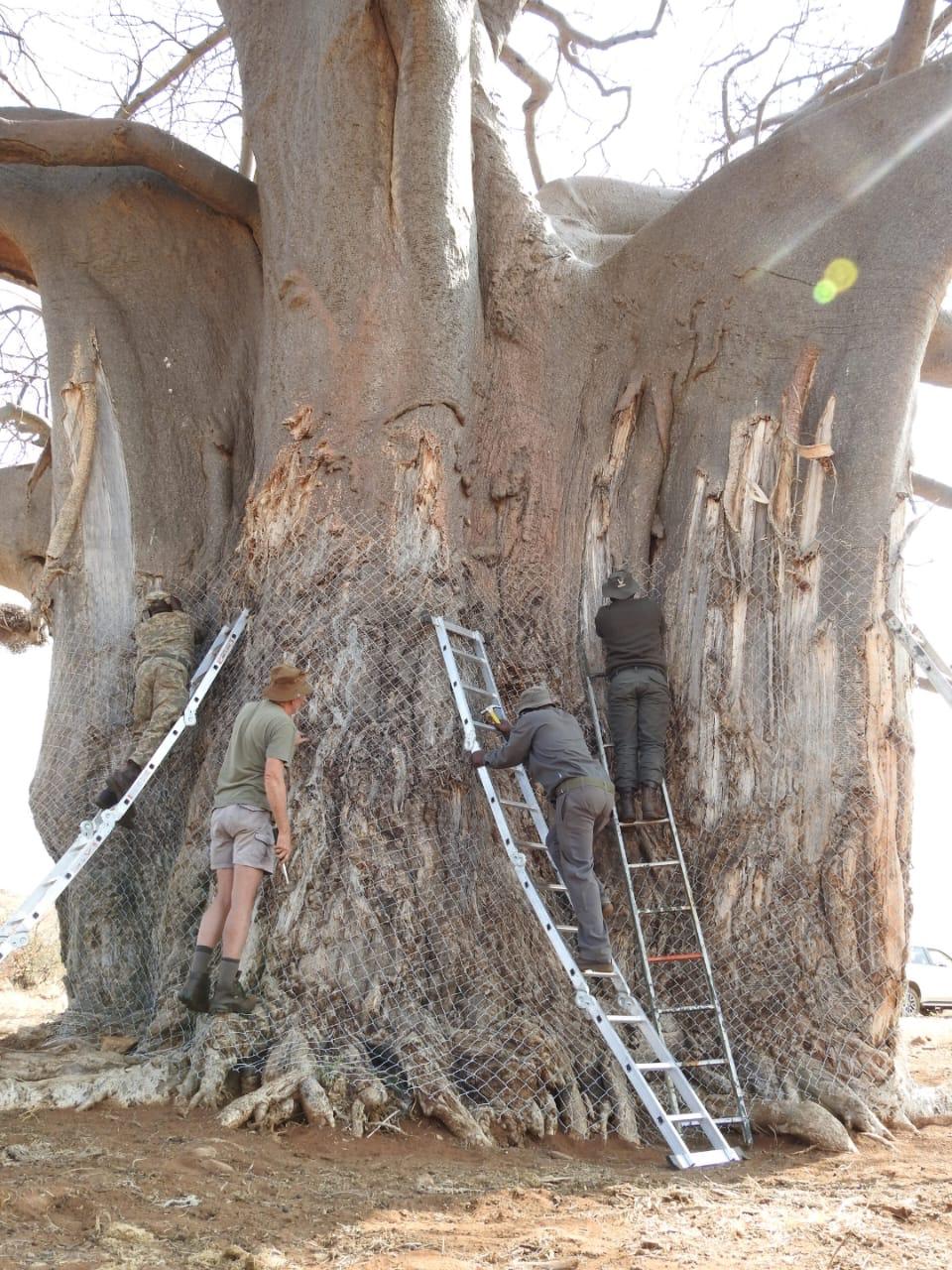
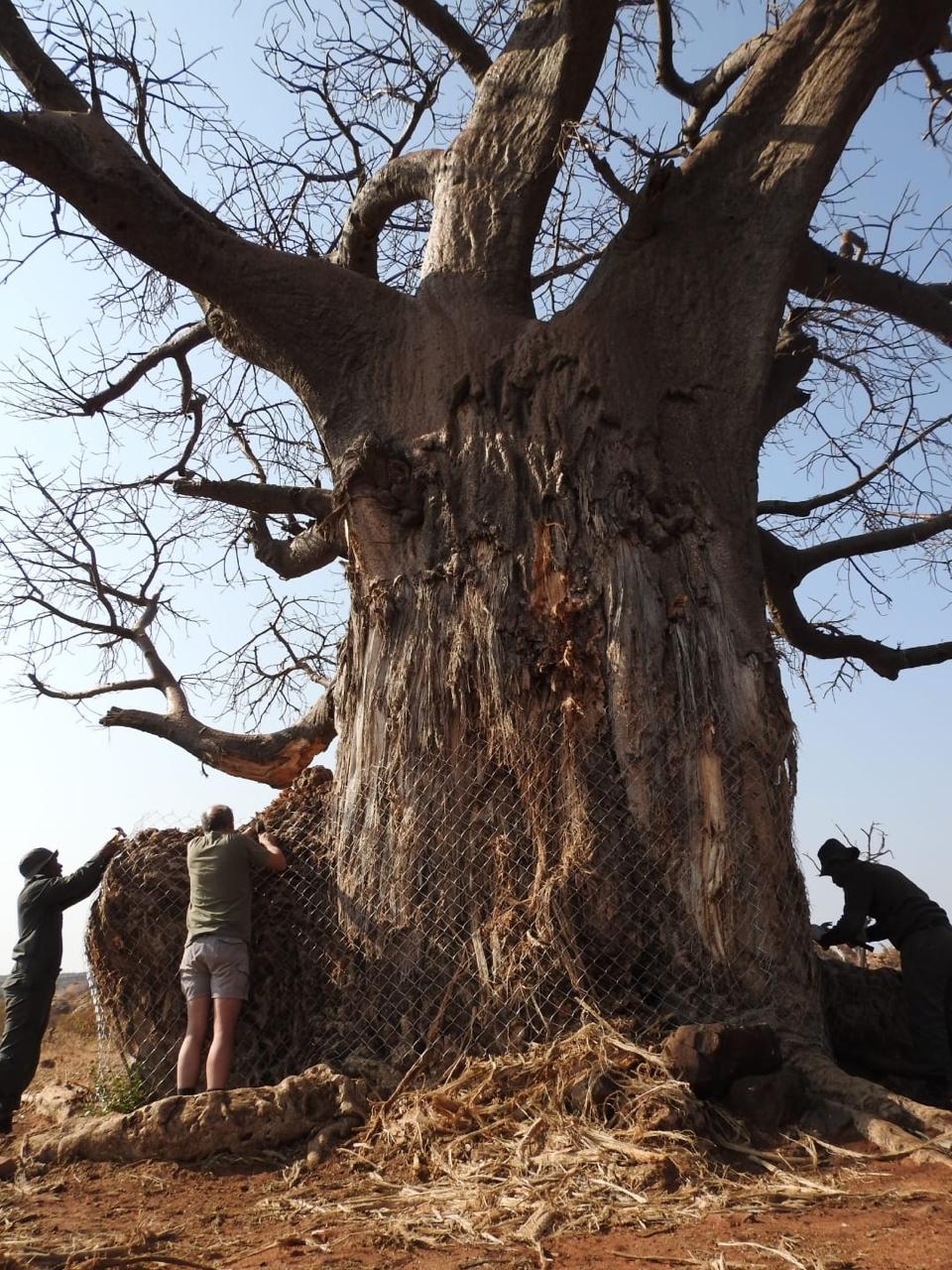
Baobab trees in Mapungubwe will not survive the increased impact of the elephants, and there is concern that these wonderful trees may disappear from the landscape. Botany and zoology departments at several universities are collaborating on a scientific plan to protect the giant baobab trees in the park. This involves installing sturdy steel fences around the tree trunks as high as the elephants can reach to prevent the large-scale stripping of the bark. Not all the trees are being protected allowing the baobabs to fulfil their ecological role in the landscape. However, this plan may not necessarily be a long-term solution.
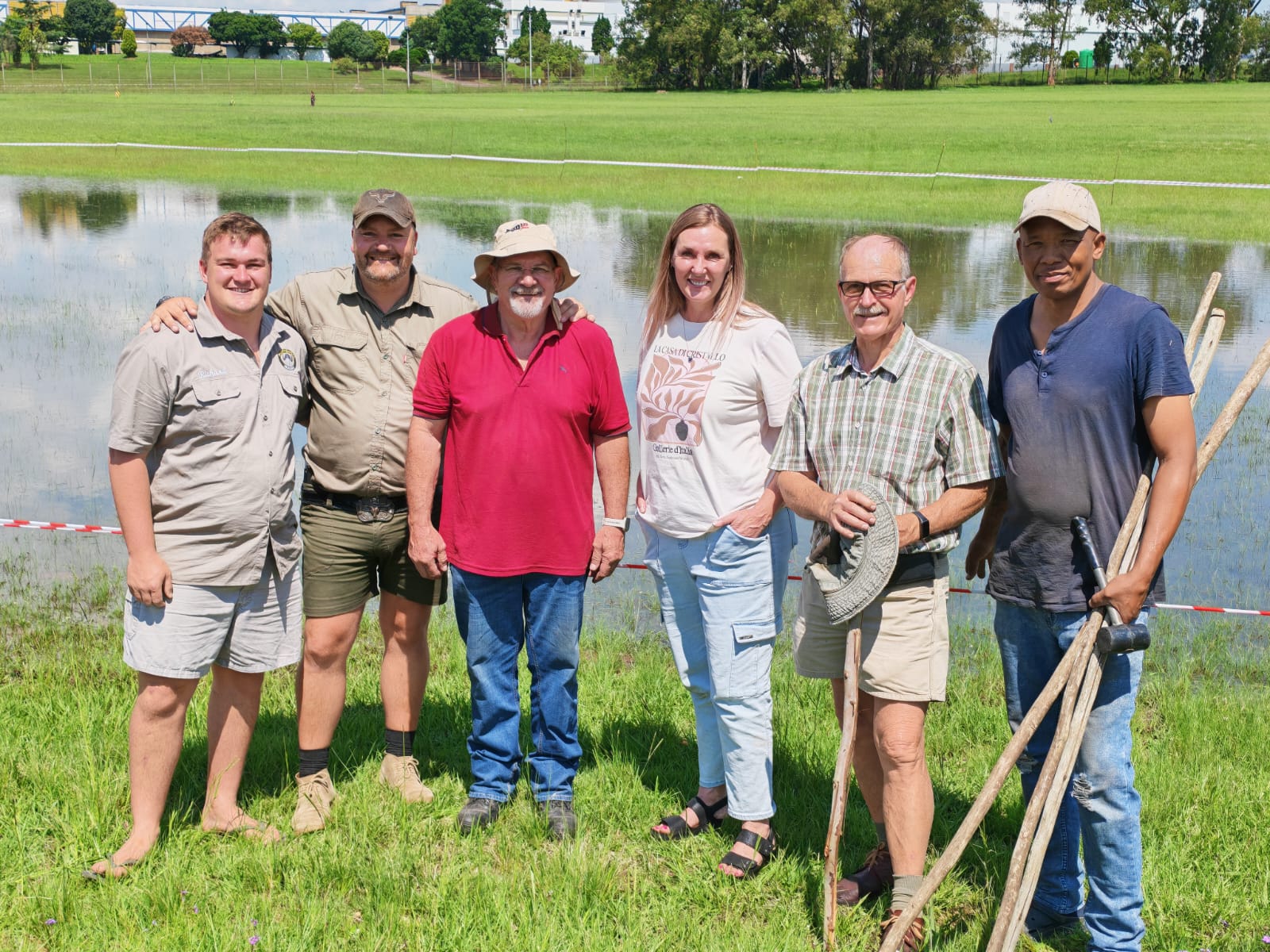
It is very costly to fence these iconic trees because the materials must meet specific requirements. Furthermore, it requires time and labour, which adds to the expense. SANParks’ honorary rangers are handling this project at this stage. The Baviaanspoort Branch of SA Hunters is raising funds to support this initiative financially. The branch has already donated R10,000 for this purpose.
The association has been involved in various long-term processes regarding elephant management in South Africa and Southern Africa, including:
- Elephant management strategy for SA
- Regulations for threatened or protected species (TOPS)
- The National Environmental Management: Biodiversity Act (NEMBA)
- National policy on the conservation and ecologically sustainable use of elephants, lions, leopards, and rhinos.
Members who wish to contribute to the protection of our iconic large baobab trees can donate to SA Hunters’ conservation fund. The Tinyarhi Trust is a registered public benefit organisation (PBO) – No. 930072003, under Section 18A (1)(a) of the Income Tax Act. Donations to the Tinyarhi Trust can be deducted from tax.
To receive a tax certificate for an individual/company, please send the following information to lizanne@sahunt.co.za Kindly limit requests for tax certificates to donations of R500 or more.
- Name and surname
- Contact details
- Address
- ID number
- Donation amount
- Attach proof of payment
Bank details
- Bank: Absa
- Name of account holder: Tinyarhi Trust
- Account number: 4093220340
- Branch: Absa Retail and Business Bank Tshwane North